

By B.Nyamsuren
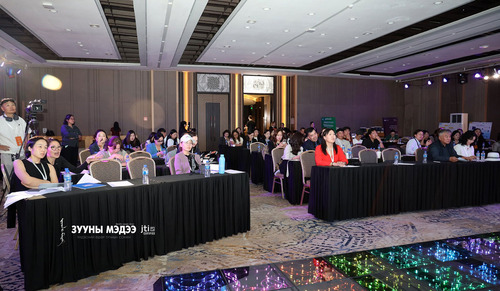
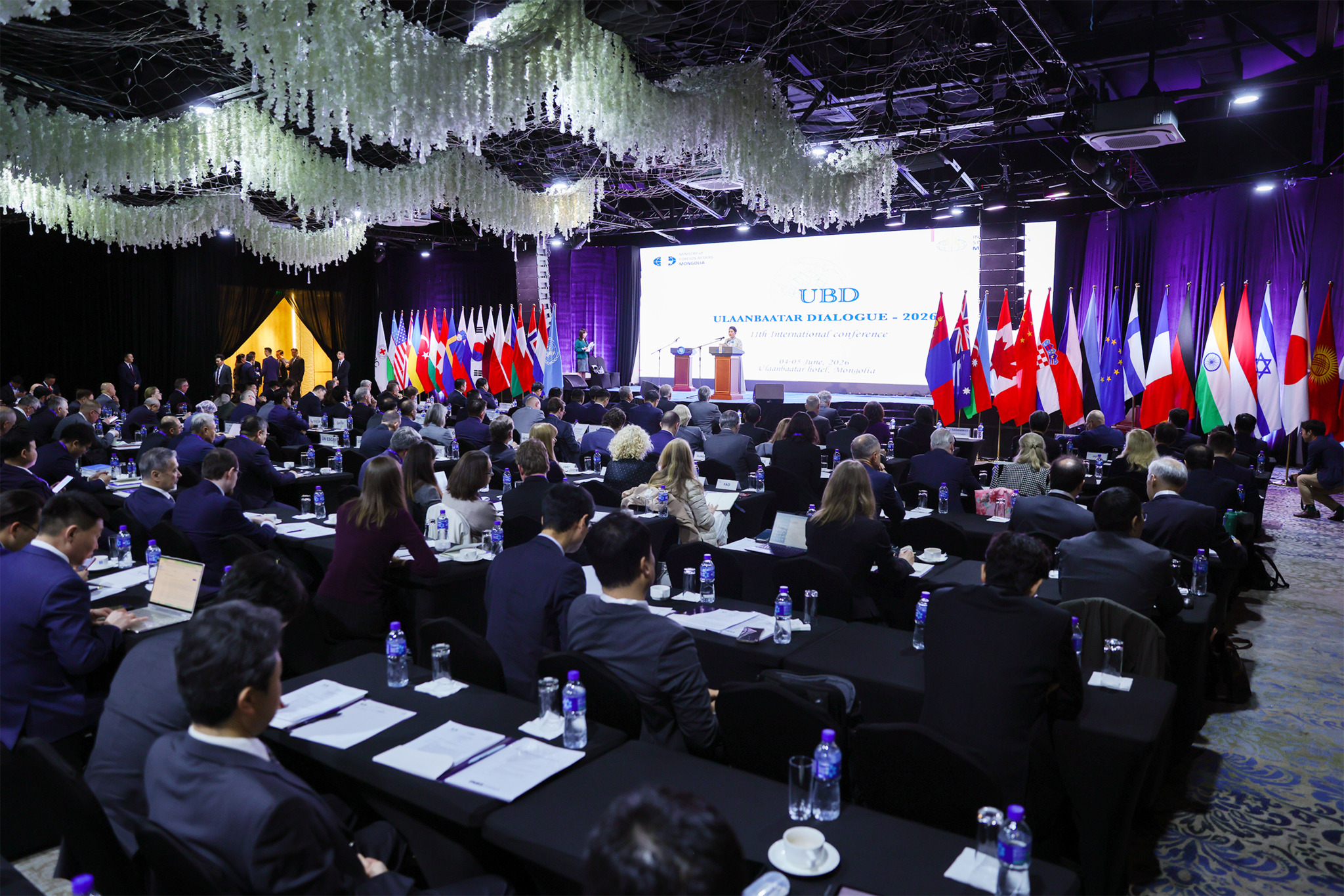
The 11th Ulaanbaatar Dialogue on Northeast Asian Security opened in Mongolia's capital on Wednesday, bringing together more than 300 participants from around 40 countries and international organizations.
Launched in 2014 following an initiative proposed by Mongolia's President in 2013, the annual forum has become an important platform for dialogue on regional security, diplomacy, and cooperation.
In a video message to the conference, United Nations Under-Secretary-General Mohamed Khaled Khiari described Northeast Asia as a strategically important yet highly sensitive region. He noted that Mongolia's efforts to host the dialogue continuously for more than a decade demonstrate that even small and medium-sized countries can make meaningful contributions to regional peace and security.
Participants at this year's conference include government officials, diplomats, scholars, and policy experts from across Asia, Europe, North America, and the Middle East. Discussions are focused on a wide range of issues, including regional security challenges, preventive diplomacy, artificial intelligence, connectivity between Northeast and Central Asia, and the development of a green energy corridor.
Against a backdrop of growing geopolitical uncertainty, many participants emphasized the importance of maintaining channels for dialogue and cooperation. Mongolian Foreign Minister Battsetseg Batmunkh noted that the conference is taking place during a period of transition in the international order.
According to her, participation has increased significantly and the level of representation continues to rise. She highlighted artificial intelligence as one of the central themes of this year's dialogue, describing it as both an opportunity and a challenge.
"Participants will exchange experiences on how artificial intelligence is being used in the security sector and present their research findings. For Mongolia, this is an opportunity to learn from international experience, particularly as our legal and regulatory framework in this area remains underdeveloped," she said.
The minister also stressed the growing importance of the global energy transition. While Mongolia possesses significant natural resources and renewable energy potential, she argued that the country must become more actively involved in regional initiatives. In particular, she pointed to opportunities related to a potential green energy corridor linking China and Central Asia.
One of the conference's distinguished guests was South Korean Minister of Unification Chung Dong-young. Speaking to journalists, he praised Mongolia's contribution to peace and security through its neutral and dialogue-oriented foreign policy.
According to Chung, Northeast Asia is one of the world's most interconnected regions economically and socially, yet political and security cooperation has lagged behind. He argued that the region still lacks a sustainable mechanism capable of promoting long-term peace and trust.
"The Ulaanbaatar Dialogue is an important platform not only for Northeast Asia but also for Mongolia's neutral diplomacy. Mongolia continues to play a valuable role in promoting peace and regional stability," he said.
Chung also reaffirmed the new South Korean administration's commitment to peaceful coexistence on the Korean Peninsula. Referring to the Greater Tumen Initiative (GTI), he noted that both China and Russia have expressed support for revitalizing the regional cooperation framework and said South Korea shares that position.
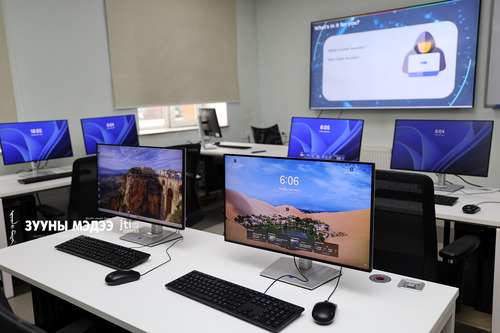
Artificial intelligence emerged as one of the most widely discussed topics throughout the conference. While the technology is already transforming sectors such as education, healthcare, manufacturing, and public services, participants also highlighted growing concerns related to cybersecurity, misinformation, privacy, and governance.
Olli Ruohomäki, Senior Research Fellow at the Finnish Institute of International Affairs, argued that governments must continue learning how to regulate and utilize artificial intelligence responsibly.
"Countries need to work together to develop appropriate regulatory frameworks and learn how to use artificial intelligence effectively," he said.
Ruohomäki also pointed out that while Europe has the European Union and Southeast Asia has ASEAN, Northeast Asia lacks a similarly developed regional mechanism. In his view, the Ulaanbaatar Dialogue provides a rare opportunity for countries in the region to meet, exchange views, and strengthen mutual understanding.
Another participant, Professor Yoko Iwama of Japan's National Graduate Institute for Policy Studies, said the conference has become increasingly valuable as geopolitical tensions make communication between countries more difficult.
"This is my second time attending the Ulaanbaatar Dialogue, and I am impressed by both the diversity of participants and the quality of discussions. It is becoming increasingly difficult to communicate and travel between some countries in the region, so this forum offers an important opportunity to maintain contacts and build relationships," she said.
Iwama described the current geopolitical environment as highly challenging, particularly as the roles of major powers continue to evolve. She argued that middle powers such as Japan and South Korea, as well as smaller countries like Mongolia, have an important responsibility to support and strengthen the rules-based international order.
As global competition intensifies and new security challenges continue to emerge, this year's Ulaanbaatar Dialogue has expanded beyond traditional security issues. Discussions now encompass artificial intelligence, energy transition, regional connectivity, and diplomacy, reflecting the increasingly complex nature of security in the 21st century.
Source: Zuuniimedee № 106 (7848) June 5, 2026
In an age of widespread misinformation, choose facts you can trust.
Zuunii Medee delivers verified, credible, and reliable news. Stand with the truth.
Support independent journalism — subscribe Zuunii Medee today. www.zuuniimedee.mn