

B.Nandin
A conversation with Dulguun Tsogbadrakh — Chevening Scholar, author, and one of Mongolia's most distinctive voices writing about her country in English
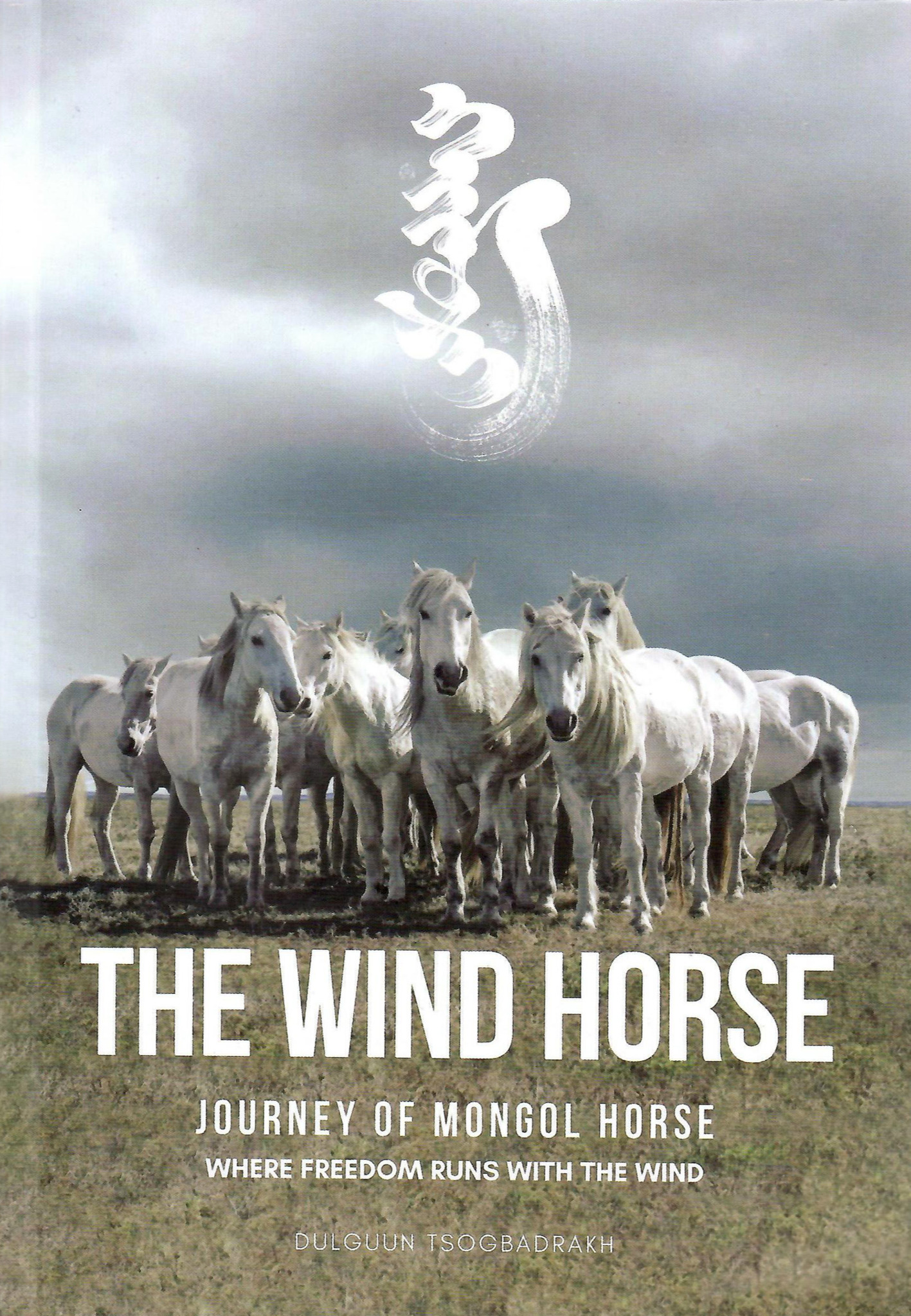
Published by Little Nomad Publishing in 2026, The Wind Horse: Journey of the Mongol Horse is the most comprehensive work written in English on the Mongol horse — drawing on history, horse culture, oral tradition, and lived experience. We sat down with its author to talk about what the book is, where it came from, and what it means.
 -Your book is called The Wind Horse: Journey of the Mongol Horse. What does that name actually mean?
-I believe that there are things in every culture that resist translation — not because the words are difficult, but because the experience behind them is untranslatable. You can explain the word. You cannot hand someone the feeling, as the meaning behind a single word can be a whole concept, an existence, or a life philosophy.
Khiimori is one of these things.
The word itself is simple. Khii means air or wind. Mori means horse. Together, they form an idea that is anything but simple: the invisible force that carries a person's dignity, vitality, courage, and fortune. Khiimori is not luck in the Western sense, nor is it fate. It rises and falls. It can be strengthened, weakened, lifted, or lost.
Wind Horse — or Khiimori — is a concept that reflects one of the core beliefs and mindsets of our entire nation. It is a philosophy of life.
And that feeling of spirit rises on horseback — it is the effect of the horse on human beings. Hence, at its heart, this book is about how the concept of Khiimori connects the horse, the human, and nature — three things bound together through something deeper than words.
Which means whether you are a businessman, a diplomat, or someone who truly wants to understand Mongolia and the Mongol people, I hope this book will open up a much deeper layer in terms of belief, mindset, and being. By the end of this book, I believe every reader will find their own version of what Khiimori means.
In a way, it is my personal translation of something that has no single translation.
-Where did the idea begin?
-There is no single point or reason for that, for sure. It started with my own experience. Everywhere I go in the world, people somewhat know about Mongolia — but I found they needed solid, honest, authentic knowledge about the country from a genuinely Mongolian person — an insider who has both local and global experience. I wanted to introduce my country truthfully, with love and honesty. Hence, I wrote the book Authentic Mongolia, released in 2025.
And even in early days, historians have said it is impossible to imagine the Mongols without their horses. Even today we say the same — Mongolia is the country of the horse. But then comes the question: why? I realised we did not have much material to properly answer that. That is also why I wrote this book. I have worked in tourism since I was 19 years old, and I always wanted someone to write this kind of book. When I was researching Authentic Mongolia, the horse kept appearing in everything — our daily phrases, our spiritual life, our identity, our state coat of arms. It is not just any horse on that coat of arms. It is the Wind Horse. Khiimori.
In addition, according to the Mongolian lunar calendar, this is a year of the Fire Horse. So I dedicated this book as a homage to the Year of the Fire Horse — and to our great Chinggis Khaan, who was also born in the year of the horse. It was the perfect timing for the book.
-What will readers actually find inside the book?
-The book begins at the very beginning — with petroglyphs. Ancient rock carvings that show how deeply the horse was embedded in life across this land thousands of years ago. From there, it traces the historic role of the horse — not only to the Mongols, but to the world. The Mongol horse changed the course of history. It carried civilisations, opened trade routes, and shaped empires.
The book also explores the legendary horses that live in our oral tradition, our epics, our national memory. But I want to be clear: yes, this is a book about the Mongol horse — but it is really a book about the Mongol people and the Mongol nation. The horse is the thread, and when you follow it, you find culture, identity, spirituality, and history all woven together. The horse is simply the most honest way into the heart of Mongolia.
I also translated two very beloved Mongolian songs — songs that are sung at every horse race, hundreds of times. Every word in every line carries deep expression, and I wanted to reveal the stories behind them. Because the best way into the heart of a people is through their art.
-What was the hardest part to write?
-Writing about something that lives so deeply in the heart of every Mongolian. Every one of us carries the spirit of the horse — it is personal, it is spiritual, it is sacred. Writing about that topic requires enormous care. You are not just writing about history or culture. You are touching something that people hold very close, individually and collectively. That delicacy — handling it with the respect it deserves — was the hardest thing.
-You grew up between the countryside and the city. How did that shape you?
-I am lucky to call myself someone with almost a dual identity — between pure nomadic life in the countryside and modern city life. Until I was five, I grew up in the countryside — every first experience of my life happened within nomadic culture. Then my parents brought me to Ulaanbaatar for school. But every summer after that, I could not wait to go back — to herd sheep, milk cows, ride horses, and simply be in nature. I believe my childhood memories and experiences shaped my love, bond, and admiration towards my roots — strong and steady.
-You chose to write in English. Why?
-English gives me a bridge. But I am not translating Mongolia for outsiders — I am inviting the world to see Mongolia on its own terms, through its own logic and its own beauty. This is a Mongolian book. It simply happens to speak in English.
-How would you describe the writing style?
-Most people who communicate in English around the world are not native speakers — it is their second language, as it is mine. So I made a deliberate choice: easy to read, approachable, simple in vocabulary — but with deeper meaning underneath. There is history, science, and fact alongside personal and local stories — but I kept it smooth. I kept it human. Just as I am talking to you right now — nothing too much. I didn't try to sound smart with heavy words, and I avoided making it too complicated for readers.
-What has the response been like?
-It has moved me. People reach out to say the book opened something for them. Non-Mongolian readers tell me they finally feel given a real window into something they had only seen from the outside. And when someone from home tells me the book captures something true about who we are — that is everything.
-What is your next project?
-I am already working on it. It is still finding its shape. But I assure you — there will be a next book. Hopefully soon.
The Wind Horse: Journey of the Mongol Horse is published by Little Nomad Publishing (2026) and is available on Amazon.
Source: Zuuniimedee № 116 (7858) June 18, 2026
In an age of widespread misinformation, choose facts you can trust.
Zuunii Medee delivers verified, credible, and reliable news. Stand with the truth.
Support independent journalism — subscribe Zuunii Medee today. www.zuuniimedee.mn