

By B.Nyamsuren
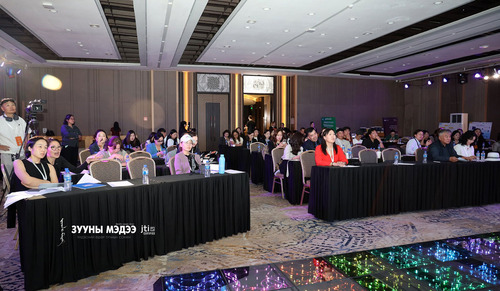
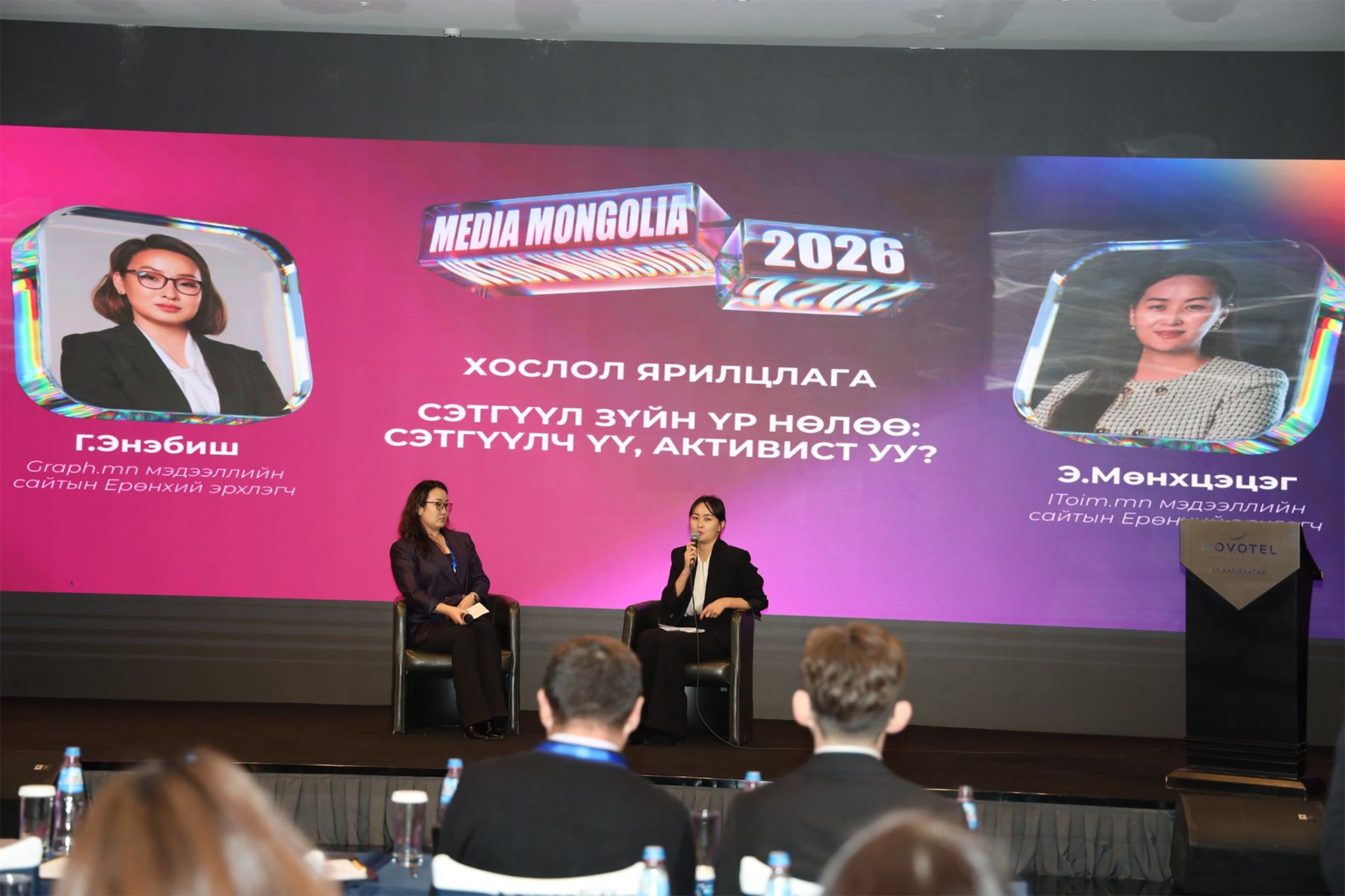
Questions such as “Is journalism still necessary?”, “How is journalism different from social media?”, “Are journalists becoming activists?”, and “How should artificial intelligence be used in journalism?” were among the key topics discussed at the MEMO 2026 conference, held yesterday at the Novotel Hotel. The event explored many pressing questions of the time, including the opportunities and risks associated with the growing use of artificial intelligence.
Today marks the 113th anniversary of the establishment of national journalism in Mongolia. On this occasion, the MEMO conference brought together media professionals to discuss the major challenges facing the journalism and media sector and to explore possible solutions.
MEMO is one of the largest forums for media professionals, where participants discuss the challenges facing the industry, emerging trends, and potential solutions, while reaffirming journalism’s core mission to serve the public with professionalism, ethics, and independence.
A key focus of this year’s conference was what organizers described as the “triple crisis” facing the media industry: rapid technological development and the challenge of adapting to it, legal and regulatory pressures affecting press freedom, and the crisis of media business models and economic sustainability. The conference also highlighted international experiences and best practices on how media organizations can adapt and survive in a rapidly changing environment. The conference was organized by the Nest Center for Journalism Innovation in collaboration with UNESCO, the Media Council, the Mongolian Media Institute, and Media Show.
B.Dulamkhorloo: The Media Industry Must Break the Old and Build the New
While having a discussion, we have interviewed with B.Dulamkhorloo, founder of the Nest Center for Journalism Innovation.
-I understand that the main focus of MEMO 2026 is how to overcome the so-called “triple crisis” facing journalism. Could you explain a bit more about what that means?
-What we’re trying to highlight through MEMO is that journalism today is facing a triple crisis. If we believe journalism still has an important role in society—and I think it does—then we have to recognize that the industry can’t overcome these challenges on its own. It needs support from both the government and the private sector. That’s really the core message we’re trying to deliver.
-So in your view, what needs to be done to overcome this triple crisis?
-When we look back at the way journalism has been practiced in the past, there are clearly some outdated approaches that no longer work. We need to break away from those and let them go. At the same time, we should keep what still has value and build on it in new ways.
That’s why we often talk about the idea of “break and build.” In other words, break what’s no longer useful, and rebuild the parts that still matter in a way that fits today’s environment. MEMO is really built around that concept.
-There are many experienced professionals and international experts participating in the conference. One of the presentations that stood out was by Ryan Powell from the International Press Institute, who talked about global challenges facing media. Many of those issues seem very similar to what we see in Mongolia. So how do we actually find solutions? Are people in the industry united on this?
-One of our organization’s goals is to serve as a bridge that brings international best practices in journalism to Mongolia. But that doesn’t mean simply copying what’s happening in the U.S. or Europe. Instead, we want to discuss those ideas locally and adapt them to Mongolia’s context.
In fact, being a bit behind sometimes gives us an advantage. We can learn from the mistakes that others have already made and avoid repeating them. In that sense, it’s actually okay if we don’t fully agree with everything international speakers say. That’s part of the learning process.
The important thing is to figure out what really works in Mongolia—what fits our culture, traditions, and social environment—and what doesn’t.
-What do you see as the key solution to the challenges facing the media industry today?
-At the end of the day, one of the biggest issues is money. Media organizations produce quality content and serve the public interest, but the financial support they receive from the market and from society is simply not enough.
In many newsrooms, just being able to pay staff salaries is already considered a major achievement. That’s the reality of the industry right now.
But if we want to introduce new technologies, experiment with artificial intelligence, or innovate in the way we operate, we need resources to do that. And that funding is still missing.
So we need to find mechanisms to support journalism financially while ensuring it remains independent. This conversation is already happening internationally. Nobel Prize-winning economists, for example, issued an open letter in September 2025 explaining why governments and the private sector should support journalism—and why that support can even include direct funding.
Through MEMO, we also want to encourage private companies and technology firms to become part of that conversation.
-We’ve heard that MEMO 2026 will also issue a declaration. What should people expect from it?
-We hope the declaration will reflect many of the ideas we’ve been discussing here. But it won’t just be our organization’s perspective. Participants in the discussions will also share their views, and we want those ideas to be included as well.
In that sense, the declaration will be a collective message from the people who took part in the conference.
Source: Zuuniimedee № 43 (7785) March 6, 2026
In an age of widespread misinformation, choose facts you can trust.
Zuunii Medee delivers verified, credible, and reliable news. Stand with the truth.
Support independent journalism — subscribe Zuunii Medee today. www.zuuniimedee.mn