

By B.Nyamsuren
Will artificial intelligence replace journalists? Who is responsible when technology makes a mistake? And how should newsrooms disclose AI-generated content?
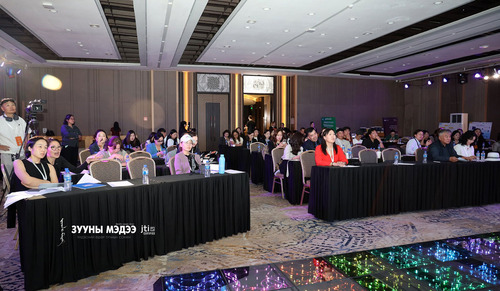
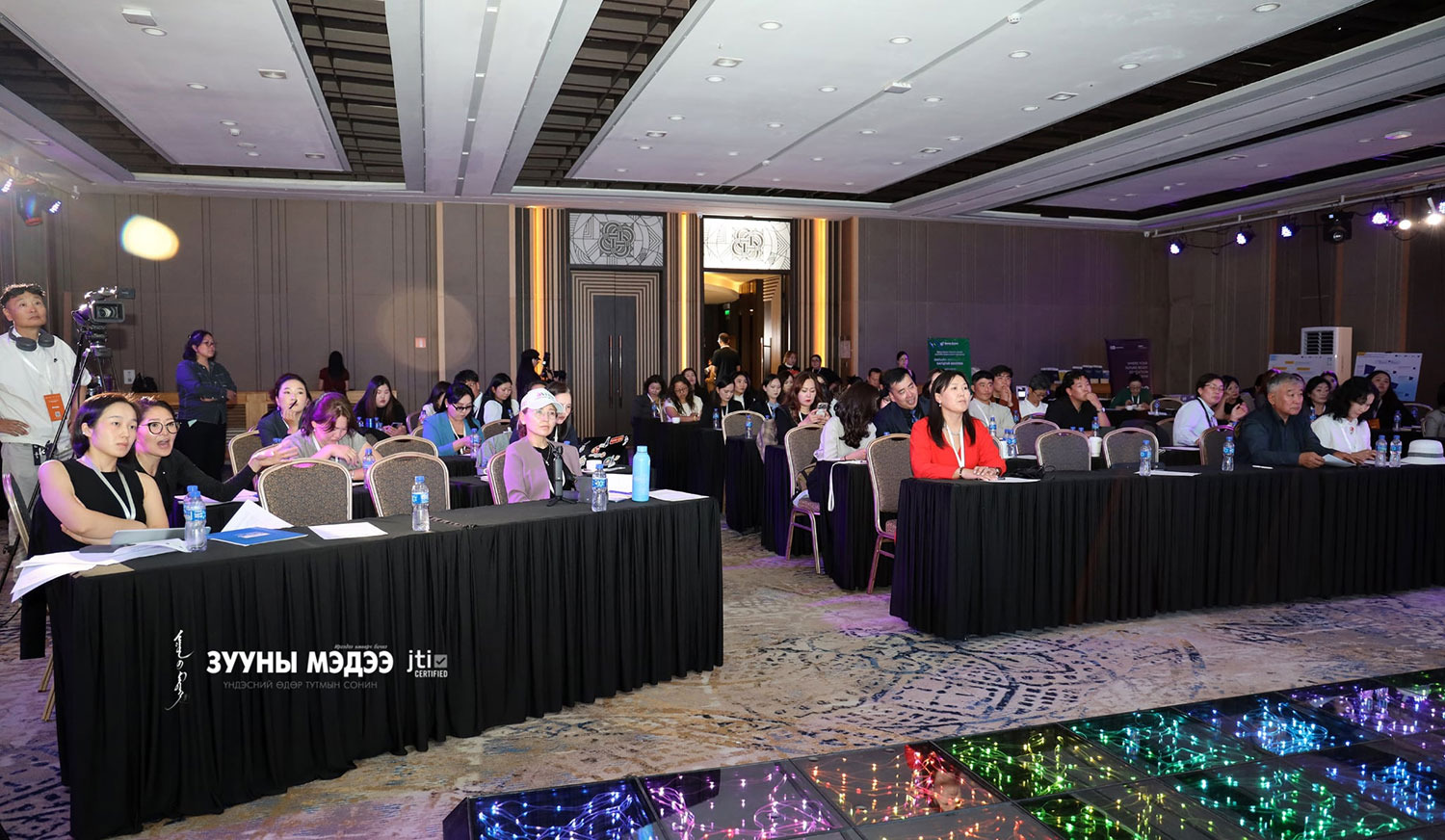
These questions were at the centre of the Journalism Ethics Forum 2026, or JEF2026, held in Ulaanbaatar on September 17.
Organised annually by the Media Council of Mongolia, this year’s forum focused on “Artificial Intelligence and Ethical Risks in Journalism.” It was jointly organised with DW Akademie, funded through the European Union-supported Voices of Change project and supported by UNESCO.
Around 80 journalists, editors, researchers, students and representatives of civil society, technology companies, legislative bodies and international organisations attended.
AI is increasingly being used to process and translate information, transcribe recordings and develop story ideas. Without clear guidance, however, it can mislead audiences, obscure sources, infringe copyright and privacy, and weaken editorial independence.
Opening the forum, Shahbaz Khan, Director of UNESCO’s Regional Office for East Asia, and Xuebing Shi from its Communication and Information sector stressed that AI-generated information must always be verified. It cannot replace evidence or reliable sources, while final responsibility must remain with journalists and editors.
Technology cannot make ethical decisions for us
G.Gunjidmaa, Executive Director of the Media Council of Mongolia, warned that AI could amplify journalistic errors by spreading them more quickly and widely.
No matter how advanced technology becomes, the fundamental principles of journalism will remain unchanged, she said. Verifying sources, ensuring accuracy, protecting personal data and maintaining editorial responsibility are becoming even more important.
“Technology will not make ethical decisions on our behalf. Professional ethics, editorial responsibility and media self-regulation will be the main shield protecting trust in journalism during technological change,” Gunjidmaa said.
She also noted that journalistic content is becoming increasingly brief, sometimes reduced to a social media poster. Yet a single headline or a few sentences can still harm a person’s rights and reputation.
Corrections and deepfakes test newsroom responsibility
Associate Professor D.Iderjargal of the Department of Journalism and Public Relations at the National University of Mongolia presented research on how Mongolian media organisations correct errors.
The study found significant differences in the form and prominence of corrections. In some cases, they were not given the same level of attention as the original inaccurate information. Although some organisations demonstrated good practices, the overall situation remained inadequate.
Dr B.Chinzorig, a lecturer in the Department of Journalism at the Mongolian National University of Education, presented his research, “A Study of Synthetic Media and Deepfake Content in New Media.”
AI can create realistic images, voices and videos that make people appear to say or do things that never happened. Such content can mislead the public, violate privacy and damage trust in the media.
Journalists must therefore verify the origin of images, audio and video, how they were created and whether they have been manipulated.
Students from media literacy and fact-checking clubs at the National University of Mongolia, the Mongolian National University of Education and Otgontenger University also presented their work in verifying sources and identifying misleading content.
AI should support journalism, not replace human judgement
During a panel discussion, representatives of Eguur.mn and Business.mn shared their experience of using AI to process information, generate ideas and reduce repetitive work.
Business.mn editor Davaadorj said AI should be viewed as an opportunity to make professional work more efficient rather than simply as a threat to jobs.
The discussion showed that the main question is not whether journalists use AI, but how they use it. Technology can support research and routine work but cannot replace communication with sources, fact-checking, contextual understanding or ethical decision-making.
One of the forum’s main outcomes was the presentation of draft ethical guidelines for AI use in newsrooms.
The draft requires human verification of AI-assisted content and maintains that final responsibility rests with the newsroom. It also addresses the protection of sources and personal data, copyright and disclosure of AI use when appropriate.
Closing the forum, L.Ninjjamts, President of the Confederation of Mongolian Journalists, said the organisation would cooperate with the Media Council to strengthen professional ethics and prevent repeated mistakes.
JEF2026 showed that fearing AI is not the central issue. The greater challenge is embracing technology without losing professional oversight, ethics and editorial accountability. AI can assist the newsroom, but responsibility for publication remains human.
Source: Zuuniimedee № 176 (7918) September 18, 2026
In an age of widespread misinformation, choose facts you can trust.
Zuunii Medee delivers verified, credible, and reliable news. Stand with the truth.
Support independent journalism — subscribe Zuunii Medee today. www.zuuniimedee.mn