

By P.Lkhagvajargal
A seven-year project funded by the Korea International Cooperation Agency (KOICA) to strengthen the School of Information and Communication Technology at the Mongolian University of Science and Technology (MUST) will officially conclude on September 11, 2026.
The closing ceremony will be held at the Corporate Hotel in Ulaanbaatar, bringing together representatives from KOICA headquarters and its Mongolia office, Sangmyung University, MUST and other organizations involved in the project.
Implemented between 2019 and 2026, the US$6 million project was led by Sangmyung University as its principal implementing partner. Around US$3 million was invested in equipment for teaching and research laboratories, approximately US$1 million was allocated to interior and exterior renovation, and the remaining US$2 million supported joint research, faculty training and other activities.

The project focused on four areas: strengthening institutional management, improving academic programmes, expanding research capacity, and modernizing the teaching and research environment.
Among its main outcomes were the development of the ICTS 2030 Master Plan, aligned with MUST’s 2030 strategy, and the revision of 20 undergraduate and postgraduate programmes. The updated curricula include new programmes in artificial intelligence, data science and robotics. Fifteen faculty members also completed 42-day professional development programmes in the Republic of Korea, while eight courses were converted into fully digital formats.
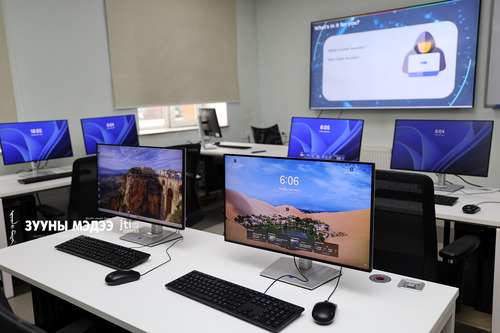
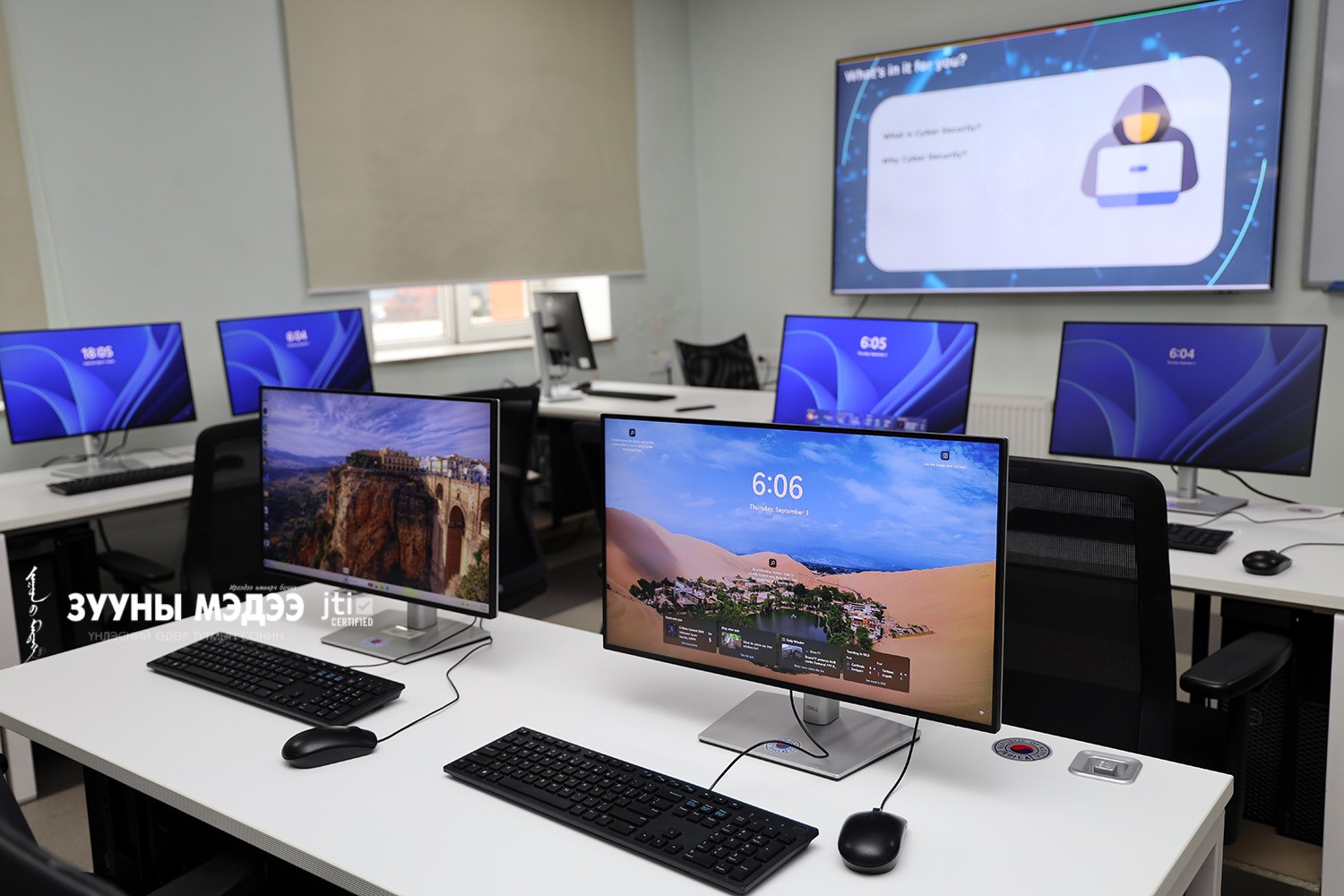
Ten new teaching and research laboratories were established, including facilities for high-performance computing, chip design and radio-frequency research. The project also supported 22 joint research initiatives involving Mongolian and Korean academics, resulting in more than 30 papers published in journals indexed in the Web of Science Citation Index Expanded.
Ahead of the closing ceremony, Zuunii Medee spoke with Professor Baek Seong-uk of Sangmyung University, the project’s general coordinator on the Korean side, and Professor A. Erdenebaatar of MUST’s School of Information and Communication Technology, the Mongolian project coordinator, about the project’s achievements, challenges and future impact.
Professor Baek Seong-uk: MUST’s facilities are now better than those at Sangmyung University
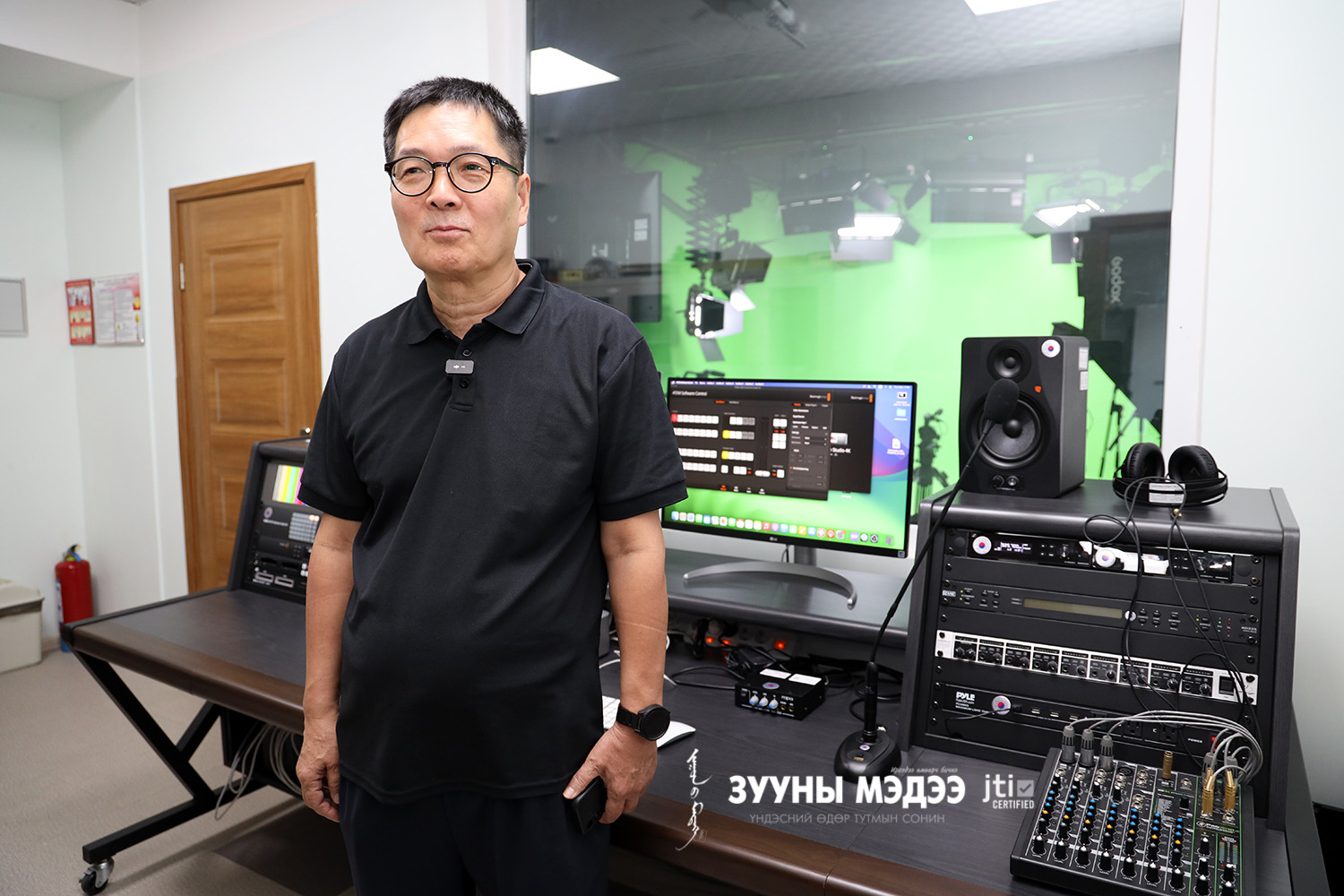
-The project began in 2019 and is now reaching its conclusion. What were the main challenges during its implementation?
-The project officially began in late 2019. However, because of the global COVID-19 pandemic, the two sides had no choice but to work remotely for almost two years. This made the implementation process particularly difficult.
During this period, four Mongolian companies successfully completed the renovation of the school’s interior and exterior. I believe the project was fortunate in one important respect. I have worked on KOICA projects of this kind for 15 years, and MUST has been one of the best partner institutions I have encountered.
Despite the disruption caused by COVID-19, we achieved strong results and are pleased to be completing the project successfully.
-How did the project contribute to strengthening MUST’s research capacity?
-At the outset, the project aimed to produce five papers for publication in Science Citation Index journals. By the time the project concluded, however, more than 22 papers had been published.
This is a substantial achievement beyond the original target. I believe the project has made an important contribution to strengthening MUST’s capacity to conduct research and publish papers in internationally recognized academic journals.
-The project established a specialized radio-frequency testing facility. Why is this facility important for Mongolia?
-One facility that particularly demonstrates MUST’s commitment is the anechoic chamber for radio-frequency testing.
Previously, even when Mongolian engineers and professors developed antennas or other wireless communication devices, there was no domestic facility capable of conducting the necessary measurements. The equipment had to be sent to Russia or China for testing, which created major difficulties for research and development.
MUST strongly emphasized that such a facility was essential. Initially, however, the available project budget was insufficient. MUST raised US$120,000 from its own resources, while KOICA provided an additional US$380,000. This made it possible to establish the facility successfully.
The chamber has attracted the attention of Mongolia’s Communications Regulatory Commission, members of parliament and other organizations in the information and communications sector. It is now undergoing the process of obtaining national ISO accreditation.
Once accredited, the reliability of measurement data produced by the chamber will be formally recognized. Researchers will then be able to use the results directly in academic papers and other research outputs.
-What opportunities will the new laboratories create for faculty members and students?
-During my 15 years of implementing projects of this kind, most capacity-building activities have focused on university management and faculty members. There have rarely been components specifically designed to strengthen students’ capabilities.
Although I work at a university in Korea, looking at the results of this project, I am almost envious that MUST now has facilities that are better than those at Sangmyung University.
The new laboratories will enable faculty members to conduct joint research with industry and expand cooperation between universities and businesses. They will also allow students to gain practical experience using the latest equipment.
Some of this technology is rare even at universities abroad. I hope Mongolian students will make full use of these laboratories and equipment in their studies and research.
Professor A.Erdenebaatar: Cooperation between the two universities will continue beyond this project

-How was the project initiated?
-This project has a long history. During the Mongolian President’s visit to the Republic of Korea in 2015, Mongolia proposed implementing a bilateral education project focused particularly on developing information technology education.
The proposal was subsequently discussed during meetings and reciprocal visits between the two countries’ education ministers. A Korean preliminary assessment team then worked in Mongolia, providing the basis for developing the project’s scope and documentation.
Implementation began in 2019, with Sangmyung University serving as the project’s principal implementing partner.
-What was the project’s main development objective?
-The project was based on a clear concept: strengthening the capacity of MUST’s School of Information and Communication Technology would help advance Mongolia’s information, communications and technology sectors to a new level.
As the information technology sector develops, the use of technology in other industries also expands. This improves the productivity and competitiveness of organizations and businesses while supporting Mongolia’s broader digital transformation and innovation.
-What were the project’s main achievements in research cooperation?
-One of the major achievements was the ICEF 2024 international academic conference, jointly organised in Ulaanbaatar by MUST’s School of Information and Communication Technology, Sangmyung University and the Korean Institute of Electrical Engineers.
Researchers from several countries participated, presenting and discussing more than 100 papers and research reports. The conference demonstrated the level of research capacity developed through the project.
-What new opportunities has the project created for students?
-Students are now using the new laboratories to conduct research for their graduation and thesis projects. They can also work with students from Sangmyung University, exchange experience and participate in joint innovation competitions rather than presenting their work only in Mongolia.
A student innovation competition has been held once in Mongolia and once in the Republic of Korea, allowing students from both countries to participate with their own projects. This has proven highly effective and should continue in the future.
-Will cooperation between MUST and Sangmyung University continue after the project concludes?
-MUST and Sangmyung University have already signed a cooperation agreement. Therefore, the partnership between the two universities will not end with the completion of the KOICA project. We expect it to continue and develop over the long term.
Source: Zuuniimedee № 171 (7913) September 11, 2026
In an age of widespread misinformation, choose facts you can trust.
Zuunii Medee delivers verified, credible, and reliable news. Stand with the truth.
Support independent journalism — subscribe Zuunii Medee today. www.zuuniimedee.mn