


By B.Nandin
The 16th China-Mongolia Journalists’ Forum brought together media executives, journalists, government communications officials and researchers to discuss strengthening cooperation between the two countries’ media sectors.
Held in Hohhot and Chengdu, the forum focused on the theme “Strengthening Friendship between the Two Countries through Media Cooperation.”
A Mongolian delegation representing newspapers, websites, magazines, radio stations and local media attended alongside communications officials from the State Great Khural and the Ulaanbaatar City Council.
During the visit, Mongolian Journalists’ Union President L. Ninjjamts and members of the union’s leadership met senior officials from the Information Office of the People’s Government of the Inner Mongolia Autonomous Region on September 7.
Bao Xianhua, a member of the Standing Committee of the CPC Inner Mongolia Autonomous Regional Committee and head of its Publicity Department, emphasised the role of journalists in strengthening Mongolia-China relations.
He said cooperation between journalists’ organisations had expanded through professional exchanges, human-resource development and the sharing of technical expertise.
L.Ninjjamts proposed jointly producing content portraying the everyday lives and work of people in both countries. She also proposed short-term language and professional training in Hohhot for Mongolian journalists studying Chinese.
Another proposal was to enable Mongolian journalists to report directly on China’s experience in combating desertification and restoring degraded land.
Addressing the forum, L. Ninjjamts said the Mongolia-China comprehensive strategic partnership continued to expand across politics, trade, education, culture and other fields. The media, she said, had an important responsibility to help citizens understand this cooperation.
“The media is not merely a means of reporting events. It is a bridge that helps people understand one another, strengthens mutual trust and opens opportunities for shared development,” she said.
She identified three priorities for future media cooperation: improving mutual understanding, promoting practical joint initiatives and developing a shared vision for journalism.
In an era of rapidly expanding digital platforms, delivering accurate, objective and responsible information had become one of the media’s most important duties, she said.
Media organisations should go beyond relaying information and help audiences understand people’s everyday lives, culture, values, and social and economic development.
L. Ninjjamts also called for reporting centred on real people and tangible results. She cited cross-border entrepreneurs, universities conducting joint research, artists promoting both countries’ cultures, and students studying abroad as examples of the human stories behind bilateral cooperation.
Potential areas of future cooperation include journalist exchanges, training for young professionals, joint research, fact-checking, data journalism, and the responsible and ethical use of artificial intelligence.
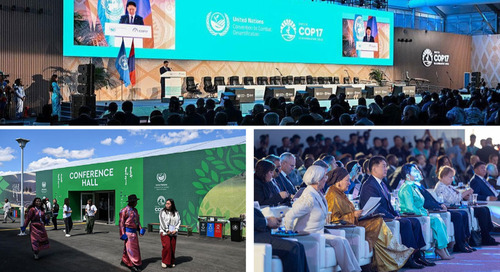
Environmental reporting was another major theme of her address. She noted that Ulaanbaatar had recently hosted the 17th Conference of the Parties to the United Nations Convention to Combat Desertification, covered by more than 700 Mongolian and international journalists.
L. Ninjjamts proposed reporting visits allowing Mongolian journalists to examine China’s desertification-control, ecological-restoration, renewable-energy and green-belt projects firsthand.
“The real outcome of our cooperation will be measured by the contribution the media makes to mutual understanding, trust, respect and shared development between the people of our two countries,” she said.
Source: Zuuniimedee № 171 (7913) September 11, 2026
In an age of widespread misinformation, choose facts you can trust.
Zuunii Medee delivers verified, credible, and reliable news. Stand with the truth.
Support independent journalism — subscribe Zuunii Medee today. www.zuuniimedee.mn