

By B.NyamsureN
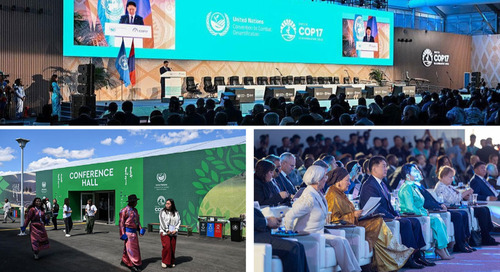
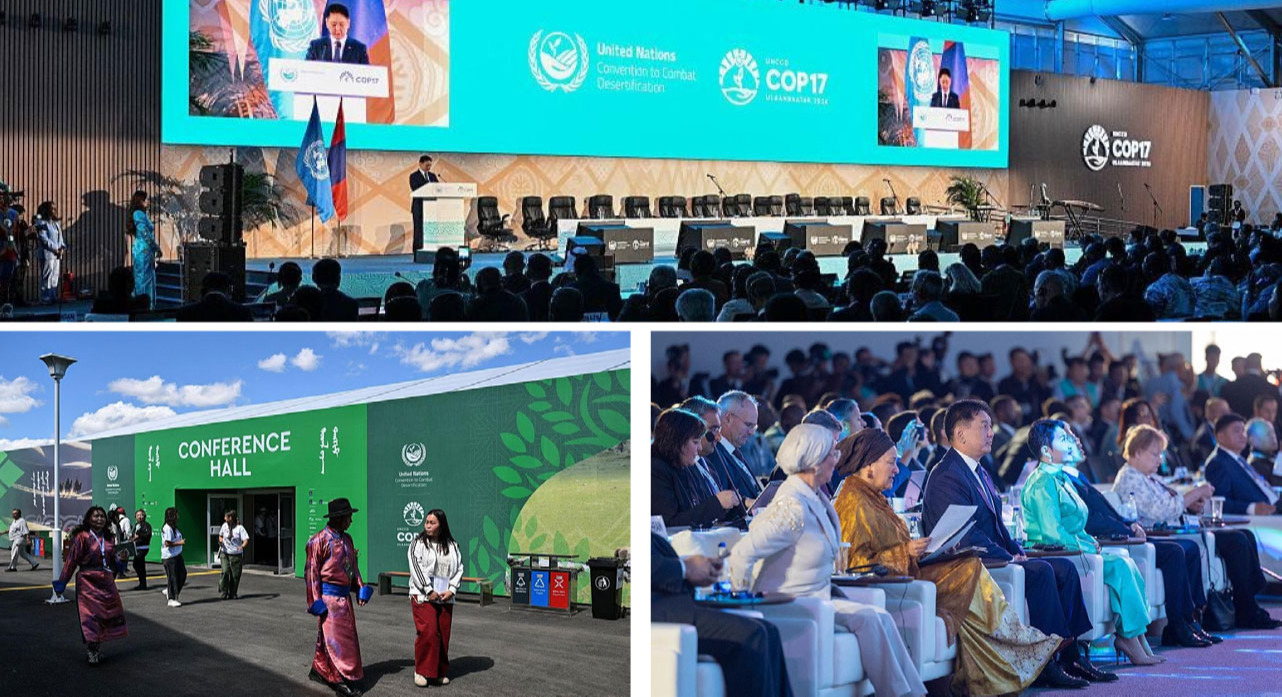
For nearly two weeks, Ulaanbaatar has served as a global forum for addressing land degradation, desertification and drought. Representatives of 196 countries and the European Union have debated how international commitments can be translated into financing, effective policies and practical solutions.
Beyond the formal negotiations, COP17 has connected the condition of land with some of the world’s most urgent concerns—food and water security, climate resilience, rural livelihoods and the rights of people whose lives depend directly on natural resources. The discussions have also produced new financing initiatives and placed Mongolia’s rangelands higher on the international agenda.
A Financing Gap of Nearly USD 280 Billion
Deputy Prime Minister T. Dorjkhand said approximately USD 355 billion is needed annually to address land degradation and desertification. However, only around USD 77 billion is currently mobilised, leaving a yearly gap of nearly USD 280 billion.
“The question is whether we will continue making promises or begin taking action,” he said. “If we want action, we need real financing.”
Representatives from around 130 countries discussed commitments amounting to approximately USD 1.3 billion during COP17. However, the final figure has not yet been confirmed.
Mongolia also announced two green financing partnerships. Negotiations with the European Investment Bank could mobilise up to EUR 200 million for sustainable forest management, land restoration, the bioeconomy and rural employment.
The SMILE programme, developed with the World Bank Group, could provide USD 100 million in blended finance to reduce land degradation, restore natural resources and support green investment.
The Asian Development Bank and its partners also launched the Financing Investments and Eradicating Land Degradation and Desertification initiative, known as FIELD.
FIELD aims to mobilise at least USD 2 billion by 2035 and bring approximately one million hectares in Asia and the Pacific under sustainable management.
It will support land and forest restoration, river-basin management and sustainable water projects, while using blended finance and risk-reduction mechanisms to attract private investment.
ADB Vice-President Scott Morris said land degradation threatens ecosystems supporting millions of rural people.
“No country can overcome this challenge alone,” he said, stressing the need for joint investment in productive landscapes, biodiversity, livelihoods, and food and water security.
COP17 also announced USD 7.5 million in grants from the Global Ecosystem-based Adaptation Fund for projects that restore ecosystems and strengthen climate resilience.
Mongolia Puts Rangelands on the Global Agenda
Mongolia officially launched the Rangelands Flagship Initiative during COP17. The initiative seeks to increase global investment in protecting, sustainably managing and restoring rangelands through knowledge-sharing, investment and institutional cooperation.
Rangelands cover around 54 percent of the world’s terrestrial surface and support approximately 500 million pastoralists, herders and Indigenous Peoples.
Minister of Environment and Climate Change Ts. Sandag-Ochir said Mongolians had managed vast landscapes for thousands of years through seasonal migration, rotational grazing and the protection of water sources.
“Today, however, herders and rangeland users are facing unprecedented pressures,” he said.
Mongolia lost approximately 7.9 million livestock during the severe 2023–2024 dzud. The disaster showed that climate risks directly affect herder incomes, food supplies, rural employment and social stability.
Healthy Soil, Secure Food
COP17’s Food Systems and Soil Health Day highlighted the relationship among soil, food, water, biodiversity and climate resilience.
Barron Joseph Orr, UNCCD Chief Scientist, said people often think of food only as something found in shops and of soil simply as dirt.
“We must consider how much water and organic matter soil can retain and how its productivity can be improved,” he said.
Healthier soil can improve water security and agricultural productivity while reducing carbon emissions and protecting biodiversity.
Lifeng Li, Director of the Land and Water Division at the Food and Agriculture Organization of the United Nations, warned that soil degradation continues to increase while improvements remain limited.
“Most of the world’s food is grown in soil,” he said. “Food security is therefore inseparable from the health of soil, plants, animals and people.”
Li said private investment requires stable policies, reliable regulations, appropriate incentives and scientific data. Constantly changing policies make it difficult for businesses to invest.
Emeline Fellus of the World Business Council for Sustainable Development said companies could invest in soil health, landscapes and sustainable supply chains. However, public-private financing mechanisms and long-term policies are required.
People Must Be Part of the Solution
COP17’s Land and People Day focused on the rights and knowledge of herders, Indigenous Peoples and local communities.
UNCCD Executive Secretary Yasmine Fouad said people who have managed land for generations should not be regarded merely as beneficiaries.
“They must be recognised as partners in decision-making and implementation,” she said.
Traditional knowledge about seasonal changes, water sources and grazing practices can complement modern science and contribute to more effective restoration policies.
Minister of Justice and Home Affairs S. Amarsaikhan said mining, urbanisation and land degradation had increasingly restricted herders’ and local communities’ access to land.
“Their rights must be genuinely protected through law and policy,” he said.
African representatives warned that drought, water scarcity and the loss of traditional grazing routes were contributing to livelihood losses, migration and social instability.
Indigenous representatives from the Americas stressed that land rights extend beyond ownership. Land is also the foundation of culture, language, spirituality, heritage and the survival of future generations.
Participants agreed that herders, Indigenous Peoples and local communities must be recognised as rights holders, knowledge holders and partners in land restoration.
The Real Test Comes After COP17
COP17’s main financing announcements include up to EUR 200 million for sustainable forest management, a potential USD 100 million through SMILE, a USD 2 billion target under FIELD, USD 7.5 million in adaptation grants and around USD 1.3 billion in commitments still under discussion.
Not all these figures represent confirmed funding. Some remain under negotiation, while others are long-term targets or political commitments.
COP17’s success will therefore depend on whether the announcements made in Ulaanbaatar lead to funded projects, restored land and measurable improvements in people’s lives.
Source: Zuuniimedee № 161 (7903) August 28, 2026
In an age of widespread misinformation, choose facts you can trust.
Zuunii Medee delivers verified, credible, and reliable news. Stand with the truth.
Support independent journalism — subscribe Zuunii Medee today. www.zuuniimedee.mn