

By B.NNYAMSUREN
UNCCD COP17, hosted by Mongolia in Ulaanbaatar from August 17 to 28, is approaching its conclusion. As the international community evaluates the discussions and commitments made in Mongolia, attention is already turning to Egypt, which will host COP18 in Sharm El-Sheikh in 2028.
Egypt is among the countries most severely affected by drought, desertification and water scarcity. On the ninth day of COP17, the country officially opened its national pavilion and introduced the challenges and priorities it plans to carry forward to the next conference.
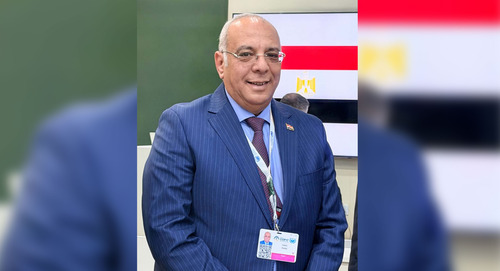
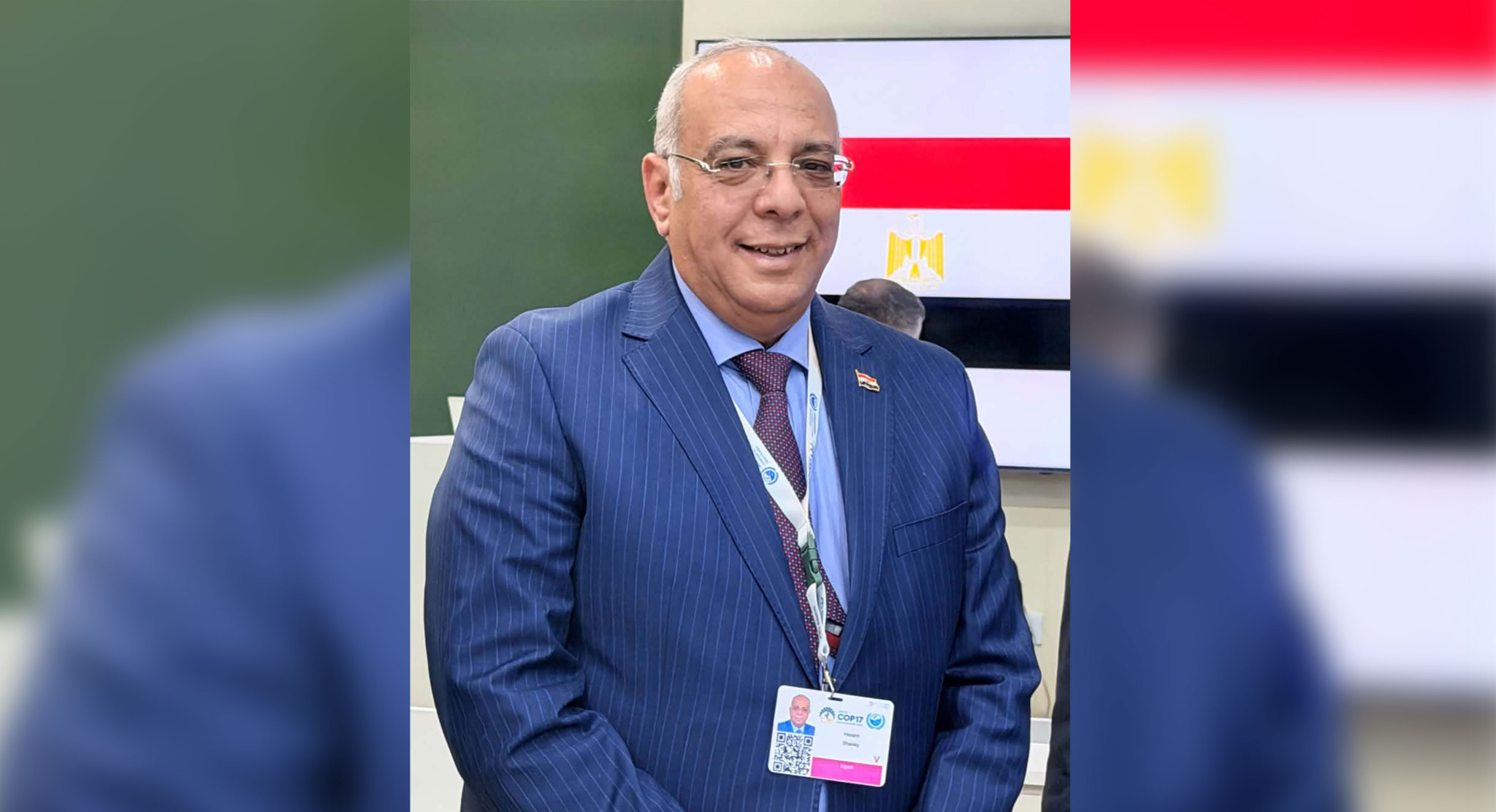
On this occasion, Zuunii Medee spoke with Prof. Dr. Hosam Shawky, President of the Desert Research Center under Egypt’s Ministry of Agriculture and Land Reclamation, about preparations for COP18, Egypt’s severe water deficit and why every drop of water matters.
He discussed Egypt’s preparations for COP18, the country’s growing water deficit, the importance of water reuse and the link between water scarcity and food imports.
-Egypt will host the next UNCCD Conference of the Parties. What is the country planning for COP18?
-We are pleased to announce that Egypt will host UNCCD COP18 in Sharm El-Sheikh—the City of Peace—in 2028.
Egypt is eager to host this important conference because we are among the countries most seriously affected by drought, desertification and land degradation.
We face an acute shortage of water and extremely dry climatic conditions. Declining rainfall and decreasing water availability are placing increasing pressure on our land, agriculture and population.
Since 2017, more than 750,000 hectares of land in Egypt have been affected by degradation due to drought, declining rainfall and reduced water supplies.
These are not distant or theoretical issues for Egypt. They directly affect our food production, natural resources and the livelihoods of our people.
That is why we are eager to host COP18 and contribute to finding practical solutions to drought, desertification and land degradation.
-Water was one of the main themes discussed at COP17. How serious is water scarcity in Egypt?
-As our minister explained, Egypt is experiencing severe water scarcity. We are already below the water-poverty threshold.
Annual water availability in Egypt has fallen to approximately 400 cubic metres per person. The internationally recognised water-scarcity threshold is 1,000 cubic metres per person annually.
Imagine the difference between these two figures. Egypt has access to less than half the minimum amount represented by that threshold.
The Nile River is our main source of water, providing approximately 98 per cent of the country’s supply.
Egypt’s share of Nile water was determined when the country’s population was around 20 million. Today, Egypt has more than 110 million people. We also host approximately 10 million migrants and refugees.
All these people need drinking water, food and essential services.
Egypt’s total annual water requirements exceed 120 billion cubic metres. However, our share of Nile water is only around 55.5 billion cubic metres annually.
This creates an enormous gap between the water available to us and the amount required by our population and economy.
-In Mongolia, freshwater is sometimes used for flushing toilets, washing vehicles and other everyday purposes. What is your view on this use of clean water?
-In Egypt, we cannot afford to use freshwater carelessly. Every drop of water counts. Water is not an unlimited resource, particularly in dry countries. People must understand its real value and use it according to the conditions and resources of their country.
Because Egypt faces such a severe shortage, we must maximise the value of every available drop.
-How does Egypt reuse water?
-Agricultural drainage water is treated and reused, sometimes as many as three times.
We are investing heavily in water treatment, desalination and reuse. These investments are essential for ensuring that we have at least the minimum amount of water needed by our population.
We do not have the luxury of using water only once and then allowing it to go to waste. We must collect, treat and reuse it wherever possible.
This requires major investment in infrastructure and technology, but Egypt has no alternative. Water reuse is a necessity for our country.
-How does the water deficit affect Egypt’s food security?
-Water and food security are directly connected. If sufficient water were available, Egypt could produce more food for its population.
However, because our water allocation is not enough to meet all our agricultural and domestic needs, we must import a considerable proportion of our food from other countries.
In this sense, food imports also help Egypt compensate for its water deficit. When we import food, we are indirectly importing the water that was used to produce it elsewhere.
Give us sufficient water and we can produce more food for every person in Egypt. But without enough water, agricultural production cannot meet the full demand of our growing population.
This is why water scarcity is not only an environmental issue. It is also an issue of food security, economic stability and national development.
-What lessons can other countries learn from Egypt’s experience?
-Countries must recognise the value of water before they face a severe shortage.
Investment in water treatment, reuse, desalination and efficient irrigation should not be delayed until a crisis begins. Governments, businesses and citizens all have a role in protecting water resources.
Every country has different conditions, but the principle is the same: water must be managed responsibly because it supports agriculture, food production, public health and economic development.
-How would you assess the organisation and discussions at COP17 in Mongolia?
-The Government of Mongolia has been highly successful in organising COP17.
The conference has brought together representatives from many countries and provided valuable opportunities to exchange knowledge, experiences and possible solutions.
Countries are sharing the work they have already carried out, the challenges they face and what they hope to implement in the future.
The most important question is how the ideas, discussions and commitments presented at COP17 will be translated into practical action. I would like to express my sincere gratitude to the Government of Mongolia for successfully hosting this important international conference.
Source: Zuuniimedee № 161 (7903) August 28, 2026
In an age of widespread misinformation, choose facts you can trust.
Zuunii Medee delivers verified, credible, and reliable news. Stand with the truth.
Support independent journalism — subscribe Zuunii Medee today. www.zuuniimedee.mn