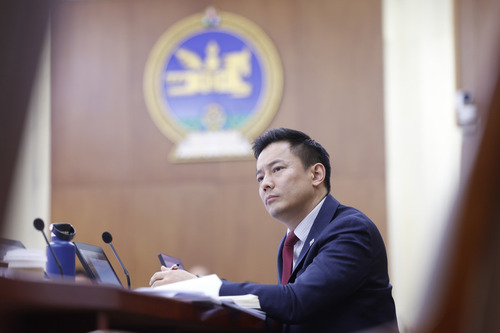



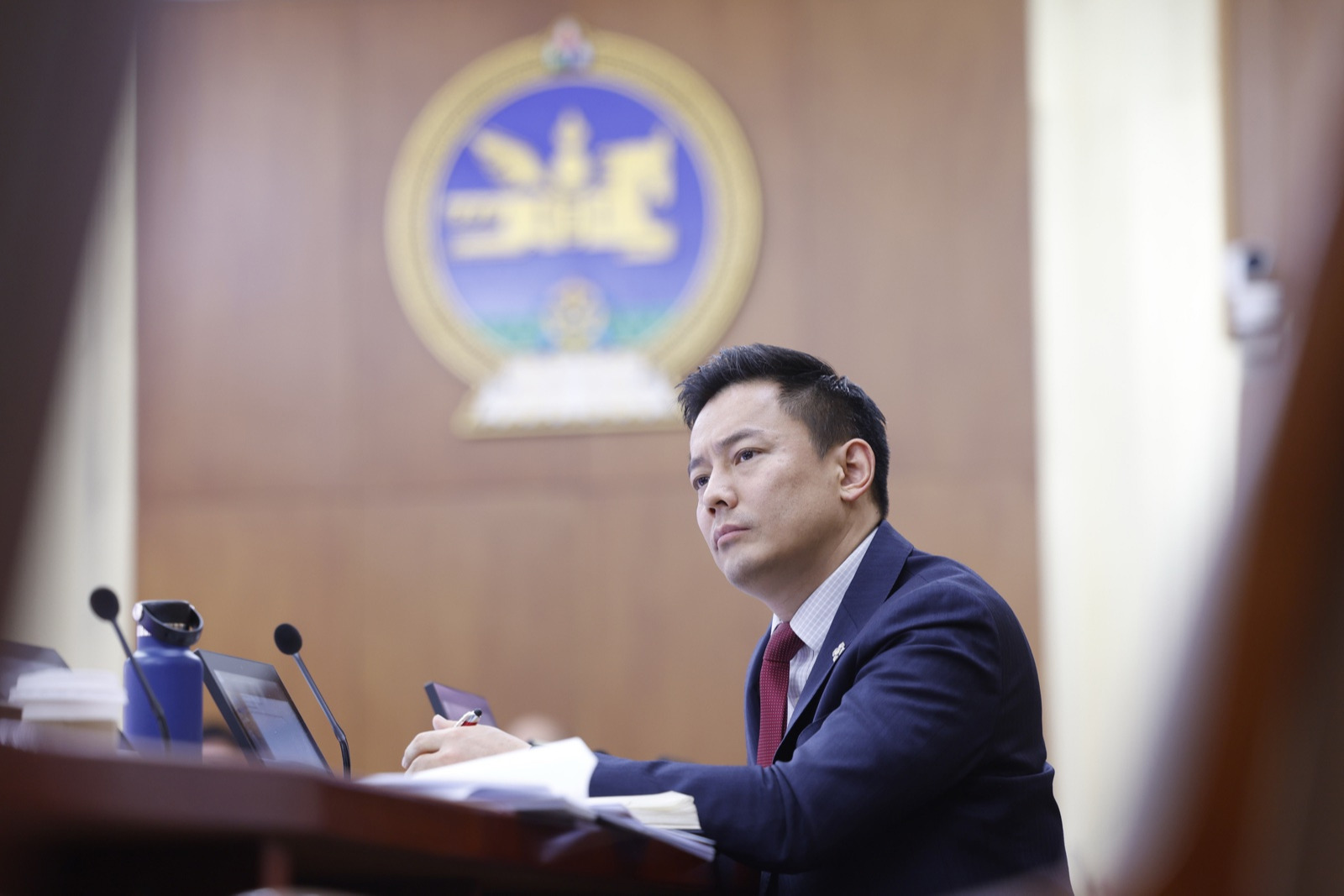
By Batnairamdal Otgonshar, Member of Parliament
Corporate earnings reports are written primarily for shareholders. They measure production, costs, profits and dividends. Occasionally, however, they reveal something much larger: how the economics of a project have changed, how bargaining positions have evolved, and whether a country recognizes that the world around it has fundamentally shifted.
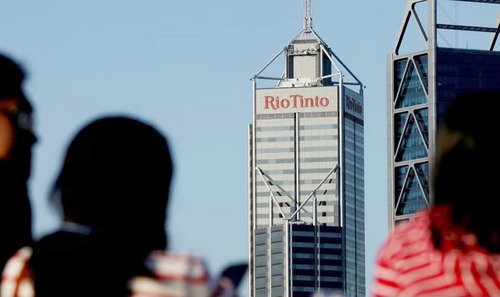
Rio Tinto's results for the first half of 2026 are one such report.
At first glance, the story appears straightforward. Rio Tinto’s underlying earnings rose 43 per cent to US$6.85 billion. Underlying EBITDA increased 28 per cent to US$14.83 billion. Free cash flow climbed 75 per cent to US$3.83 billion, while the interim dividend rose 43 per cent to US$2.11 per share.
The most important story, however, lies beneath those figures.
 For the first time, Rio Tinto reported that copper, aluminium and lithium together contributed more than half of group underlying EBITDA, surpassing iron ore's traditionally dominant contribution. Copper EBITDA reached approximately US$5.7 billion. That marks more than a strong financial result. It signals a profound strategic shift. Rio Tinto is no longer defined almost exclusively by iron ore. Its future is increasingly tied to copper, and at the center of that transition sits Oyu Tolgoi.
That shift has implications extending well beyond Rio Tinto's balance sheet. Oyu Tolgoi is no longer simply another mining project within the company's global portfolio. It has become one of Rio’s most strategically important assets. As its importance grows and its economics improve, the assumptions that shaped the partnership seventeen years ago inevitably deserve renewed examination. Whether Mongolia has recognized that changing reality, and whether the June agreement reflects it, remains an open question.
Oyu Tolgoi itself has changed dramatically. First-half copper production rose 31 per cent year on year, and Rio Tinto continues to expect the combined open-pit and underground production to average around 500,000 tonnes of copper annually between 2028 and 2036. At the same time, Rio Tinto lowered its copper portfolio’s C1 net unit-cost guidance to US$0.30–0.50 per pound from US$0.65–0.75 per pound. In the same production update, Rio reported that Oyu Tolgoi’s underground ramp-up remained on track, delivering 31 per cent year-on-year growth.
None of this should surprise anyone. No serious investor expects the economics of a sixty-year mining project to remain static. Markets evolve. Technologies advance. Operational risks decline. Commodity cycles change. The partnerships governing such projects should evolve as well, not unpredictably or unilaterally, but transparently, lawfully and by mutual agreement. Projects do not become fair simply because they become more profitable. They become fair when the rules governing them evolve alongside the value they create.
This dynamic is precisely what Raymond Vernon's theory of Obsolescing Bargain describes. As resource projects mature, risks decline, capital becomes immovable and bargaining dynamics naturally evolve. Recognizing this is not an argument for tearing up contracts. It is an argument that long-term partnerships remain sustainable only when they adapt through negotiations as the underlying economics fundamentally change.
Successful resource jurisdictions have long understood this. Botswana has periodically renegotiated its partnership with De Beers as its diamond industry matured. Chile has revised the governance and economics of its strategic lithium assets through negotiated agreements rather than unilateral legislative change. The lesson is straightforward: long-life resource partnerships remain stable because they evolve.
That is also why Rio Tinto's latest results reinforce a conclusion Parliament had already reached.
Resolution No. 120, adopted on 26 December 2025 following the parliamentary oversight process, directed the Government to resolve outstanding questions surrounding the wider Oyu Tolgoi strategic deposit, to report quarterly to the Economic Standing Committee, and to present its findings in the 2026 autumn session. Among other issues, the Resolution requires answers on compliance with the Constitution regarding the Entrée licence areas and safeguards against shareholder-financing terms that could erode Mongolia's share of benefits. It also requires measures to ensure Mongolia receives no less than 53 per cent of the project's total benefits, consistent with the investor's original commitment, with that share periodically reviewed as the project's economics evolve.
Rio's latest results make those questions harder to postpone, not easier. They describe Oyu Tolgoi as more productive, lower-risk and strategically more valuable to Rio Tinto than the project on which many of the original financing assumptions were built.
The Government argues that this reality has already been recognized through the June agreement with Rio Tinto. The agreement adjusts the shareholder loan interest rate under the 2011 Amended and Restated Shareholders’ Agreement's (“ARSHA”) periodic-review clause, addresses the Entrée mine lease issue, subject to Mongolia’s constitutional requirements and aims to bring forward shareholder distributions to 2026. Those are meaningful achievements. However, they are not yet binding legal outcomes, and they should not be treated as such.
Until the revised interest formula, recurring dividend arrangement, reduced management-fee provisions and any related changes are incorporated directly into the ARSHA and other governing agreements, Parliament should regard the package as unfinished rather than settled. Political commitments are valuable. Contracts are what endure.
The distinction matters because implementation determines whether the economics of the partnership have genuinely changed or whether only the financing cost of the existing structure has been reduced.
The contrast is particularly striking when viewed alongside Rio Tinto’s own shareholders. During the first half of 2026, Rio increased its interim dividends by 43 per cent, distributing approximately US$3.4 billion to its investors, supported in part by Oyu Tolgoi's strong performance. Mongolia, despite owning 34 per cent of the same mine, received no comparable distribution. That is what unresolved ownership and capital allocation arrangements cost during one of the strongest years in the project’s history.
There is also a useful benchmark against which this year's distribution should be measured. In a 10 March 2026 research note, Morgan Stanley estimated that Oyu Tolgoi could generate approximately US$5.2 billion in pre-tax unlevered free cash flow on average during 2026-2027. Mongolia's 34 per cent interest implies a proportionate claim of roughly US$1.8 billion per year. That figure, not the reduction in shareholder loan interest rate, provides the clearest benchmark against which this year's distribution should be judged. If the amount ultimately received falls substantially short, it would suggest that the June agreement reduced financing costs without fundamentally addressing the economic structure itself.
None of these questions are optional under the Constitution. Article 6.2 establishes the critical balance that every deposit of strategic importance must strike: investors are entitled to a competitive return on the capital, technology and risk they contribute, while the Mongolian people, as the constitutional owners of the country’s mineral wealth, are entitled to a demonstrably fair share of the value it creates. Neither can endure without the other.
That principle also extends beyond financial returns. No project of this scale should require an extraordinary parliamentary hearing simply to establish basic facts about shareholder debt, related-party financing, management fees, reserve boundaries or the distribution of benefits. Transparency and regular reporting to the Parliament should be the ordinary standard of governance, not a concession secured only after public scrutiny and pressure.
Appropriately, Rio Tinto's own first-half report contains a section titled "Sustainability and social licence." The phrase is worth taking seriously. A legal license exists in statutes, permits and contracts. A social license exists only in public confidence. The first can survive litigation. The second cannot survive an enduring perception that the benefits of a country’s most important resource are not being shared fairly.
Whether that social license currently exists is not a question Rio Tinto or the Government of Mongolia can answer on the public's behalf. It will not be settled by press releases describing a financing adjustment as a comprehensive resolution, nor by corporate statements celebrating operational success. It will be settled by whether Mongolians can verify, through amended agreements and public disclosure, that the partnership has evolved alongside the project itself.
Rio Tinto's latest results establish one point beyond dispute. Oyu Tolgoi is now a lower-risk, more productive and strategically more valuable asset than the project was envisaged to be when many of the governing arrangements were negotiated.
They do not, by themselves, demonstrate that the partnership governing it has evolved accordingly.
The Constitution sets the standard. Parliament's Resolution No. 120 sets the roadmap. What should happen next is clear: the ARSHA and related agreements should be amended to reflect the June commitments; revised financing terms and dividend mechanics should be disclosed; the Entrée arrangements should be resolved transparently and consistently with the Constitution; and the Government should report progress quarterly to Parliament. Material information on Oyu Tolgoi should be equally accessible to Parliament, investors, civil society and the public, allowing all stakeholders to independently assess whether the partnership is delivering what has been promised.
The economics of Oyu Tolgoi have already changed. The agreements and governance arrangements governing it must now evolve with the same clarity, transparency and urgency.
Source: Zuuniimedee № 156 (7898) August 20, 2026
In an age of widespread misinformation, choose facts you can trust.
Zuunii Medee delivers verified, credible, and reliable news. Stand with the truth.
Support independent journalism — subscribe Zuunii Medee today. www.zuuniimedee.mn