


By B.Nyam
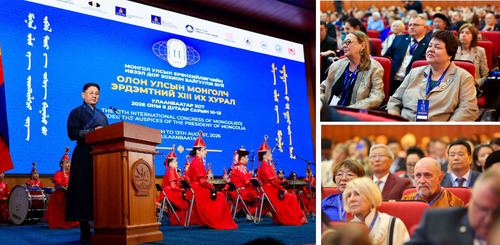
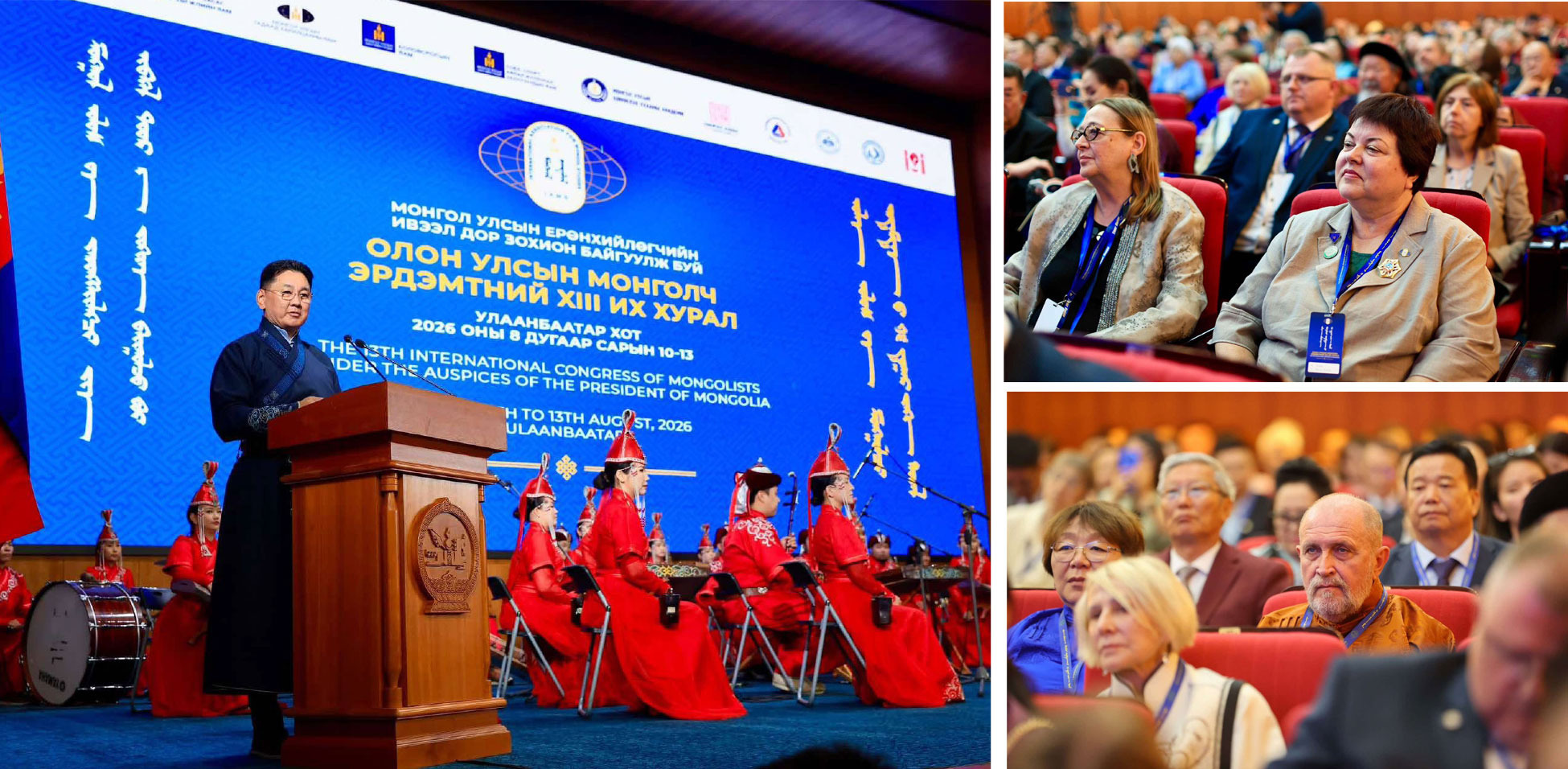
The 13th International Congress of Mongolists, held under the auspices of President of Mongolia U.Khurelsukh, brought together more than 570 scholars and researchers from 30 countries in Ulaanbaatar this week.
Held on August 10–13 under the theme “Mongolian Studies: Tradition and Modernity,” the congress featured more than 530 presentations covering Mongolian language, history, archaeology, culture, literature, ethnography, traditional knowledge, contemporary society and international relations. The youngest participant is 25 and the oldest 92.
Opening the congress, President U.Khurelsukh thanked Mongolists for their contribution to studying Mongolia’s history, language, culture and way of life and for sharing knowledge about Mongolia with the wider world. He noted that around 4,000 scholars in Mongolia and abroad are currently active in Mongolian studies.
The President stressed the need to strengthen continuity between generations of Mongolists, particularly by training young researchers, expanding international scholarship programs and ensuring that the knowledge and experience accumulated by senior scholars are passed on to future generations.
He also called for greater efforts to digitize historical documents, cultural heritage and research materials, create open-access databases and make Mongolian studies more accessible to the international academic community.
Cambridge University Professor David Sneath delivered a keynote address titled “Beyond the Sinocentric Paradigm: Trends in the Study of Mongolian History.”
The congress has a history stretching back more than six decades. The first international gathering of Mongolian language and literature scholars was held in Ulaanbaatar in 1959, attracting more than 40 scholars from 15 countries. Across the previous 12 congresses, around 4,000 researchers from more than 60 countries have participated and presented over 3,000 academic papers in more than 20 fields.
Following the congress events, President U.Khurelsukh separately presented state honors to 23 Mongolists for their contribution to advancing Mongolian studies internationally and promoting Mongolia’s history, language, culture and heritage.
Indiana University senior lecturer Legden Tserenchunt received the title of Honored Teacher of Mongolia. Twenty international scholars from China, the United States, South Korea, Russia, the United Kingdom, Japan, Germany and Israel received the Order of the Polar Star, while Austrian scholar Maria-Katharina Lang and Gabriel Bamana of the Democratic Republic of the Congo were awarded the Medal of Friendship.
Scholars continue their work in ancient Kharkhorum
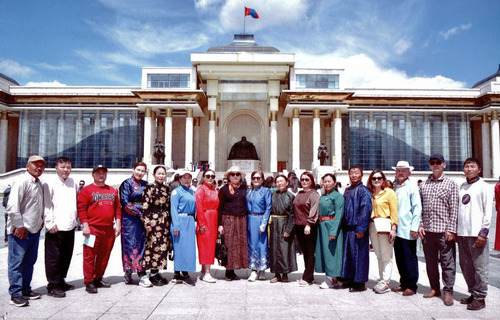
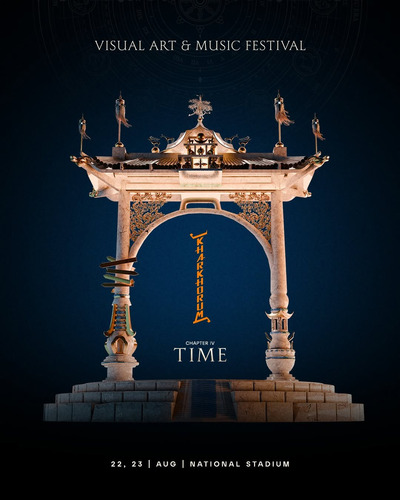
Following the Ulaanbaatar gathering, a number of congress delegates traveled to the ancient capital of Kharkhorum, where the Kharkhorum International Academic Conference and Mongolian Traditional Competition began yesterday and continues through August 14.
The academic conference, titled “The Mongolian Concept of Great Peace and Kharkhorum, Capital of the Great Mongol State,” brings together scholars specializing in the history of the Mongol Empire and its ancient capital. Discussions focus on Kharkhorum’s history, the Tumen Amgalan Palace, the development of the imperial capital and how historical and archaeological research can contribute to plans for the new city.
Mongolia began moving forward with the revival of Kharkhorum after President U.Khurelsukh issued a decree in 2022 on rebuilding the ancient capital, followed by related decisions by Parliament and the Government.
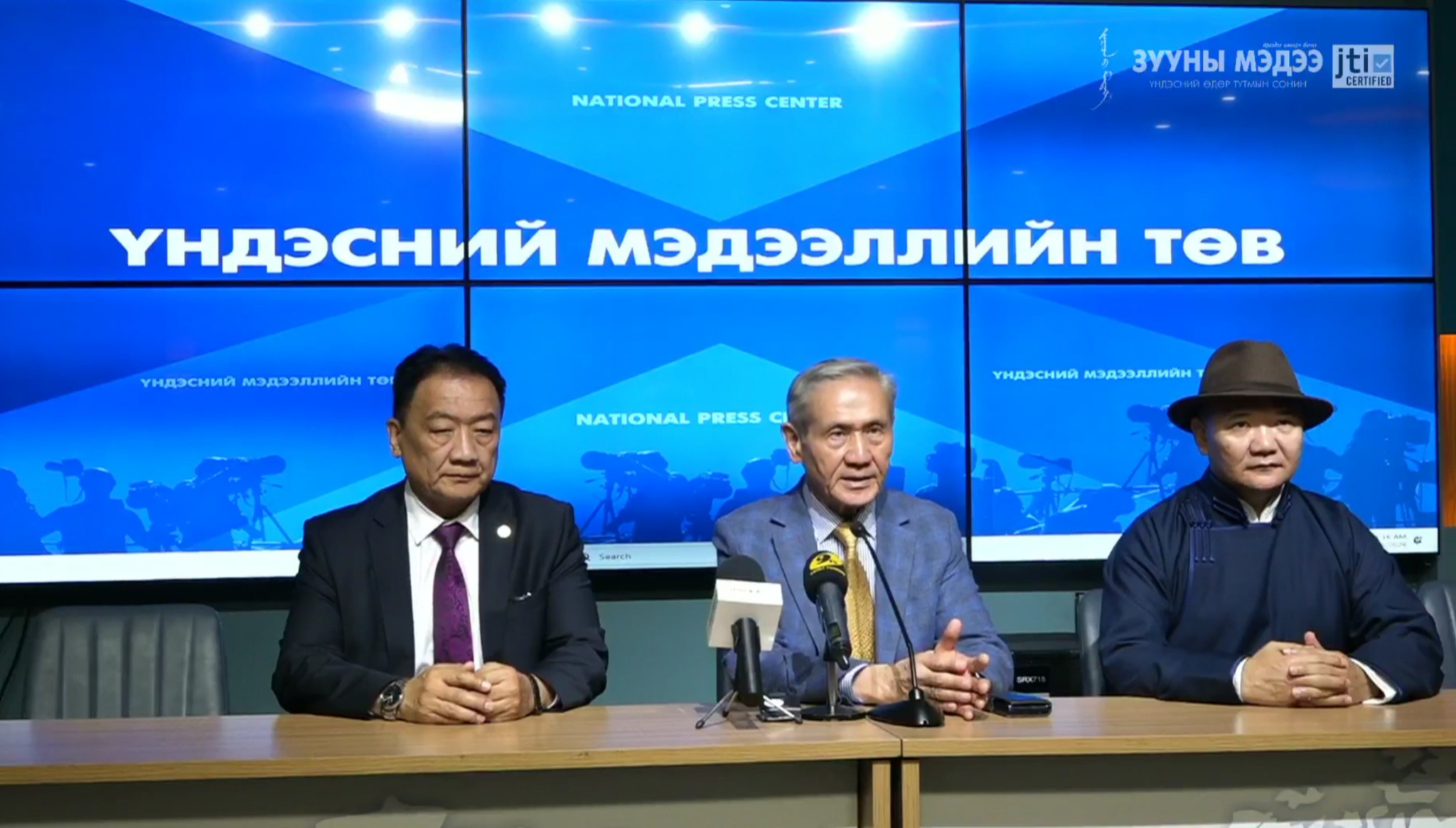
At a press conference ahead of the event, third President of Mongolia and Chairman of the Kharkhorum City Council N.Enkhbayar said the gathering was designed as a continuation of the International Congress of Mongolists, giving scholars an opportunity to take their discussions from Ulaanbaatar directly to the site of the historic capital.
He described Kharkhorum as an international center of its era, where craftsmen, engineers, officials and other specialists from different parts of the world contributed to the city’s development. Among its most famous symbols was the Silver Tree, created by the French goldsmith Guillaume Boucher in the 13th century.
President of the Mongolian Academy of Sciences S.Demberel said the reconstruction of Kharkhorum must be grounded in historical research if the new city is to preserve the identity and characteristics of the ancient capital. Scholars visiting Kharkhorum will be briefed on current development plans and will have an opportunity to provide their views and recommendations.
According to Demberel, the aim is not to limit academic participation to a single conference. Organizers hope to establish long-term cooperation with Mongolian and international researchers so that their findings and recommendations can continue to inform the development of Kharkhorum.
At the conclusion of the conference, participating scholars are expected to adopt a joint “Kharkhorum Declaration,” expressing a shared academic position in support of the revival of the ancient capital and offering research-based recommendations for its future development.
Traditional skills of Mongolian warriors highlighted
Alongside the academic conference, a Mongolian traditional competition is being held to showcase the physical skills and military traditions associated with Mongolian warriors.
MP O.Amgalanbaatar said the event was designed to demonstrate how traditional skills such as horsemanship, archery and wrestling contributed to the endurance, discipline and capabilities of Mongolian warriors.
The competition also draws inspiration from the military organization of the Mongol Empire. Sixteen teams of 10 members each are competing under the traditional “aravt,” or unit of ten, system, in which each member has a particular role and the team works as a coordinated unit.
Organizers said the competition is intended not simply as a sporting event, but as a way of presenting Mongolia’s military traditions and intangible heritage to the international scholars attending the conference.
The winning team will receive MNT 50 million, with MNT 40 million and MNT 30 million awarded to the second- and third-place teams, respectively.
Delegates will also have an opportunity to visit the Orkhon Valley, explore its historical and cultural heritage and see firsthand the area where the ancient imperial capital once stood.
By linking academic research, the revival of Kharkhorum and traditional cultural activities, organizers hope the gathering will help turn scholarly knowledge about Mongolia’s past into practical input for the development of its future city.
Source: Zuuniimedee № 151 (7893) August 14, 2026
In an age of widespread misinformation, choose facts you can trust.
Zuunii Medee delivers verified, credible, and reliable news. Stand with the truth.
Support independent journalism — subscribe Zuunii Medee today. www.zuuniimedee.mn