

By B.Nandin
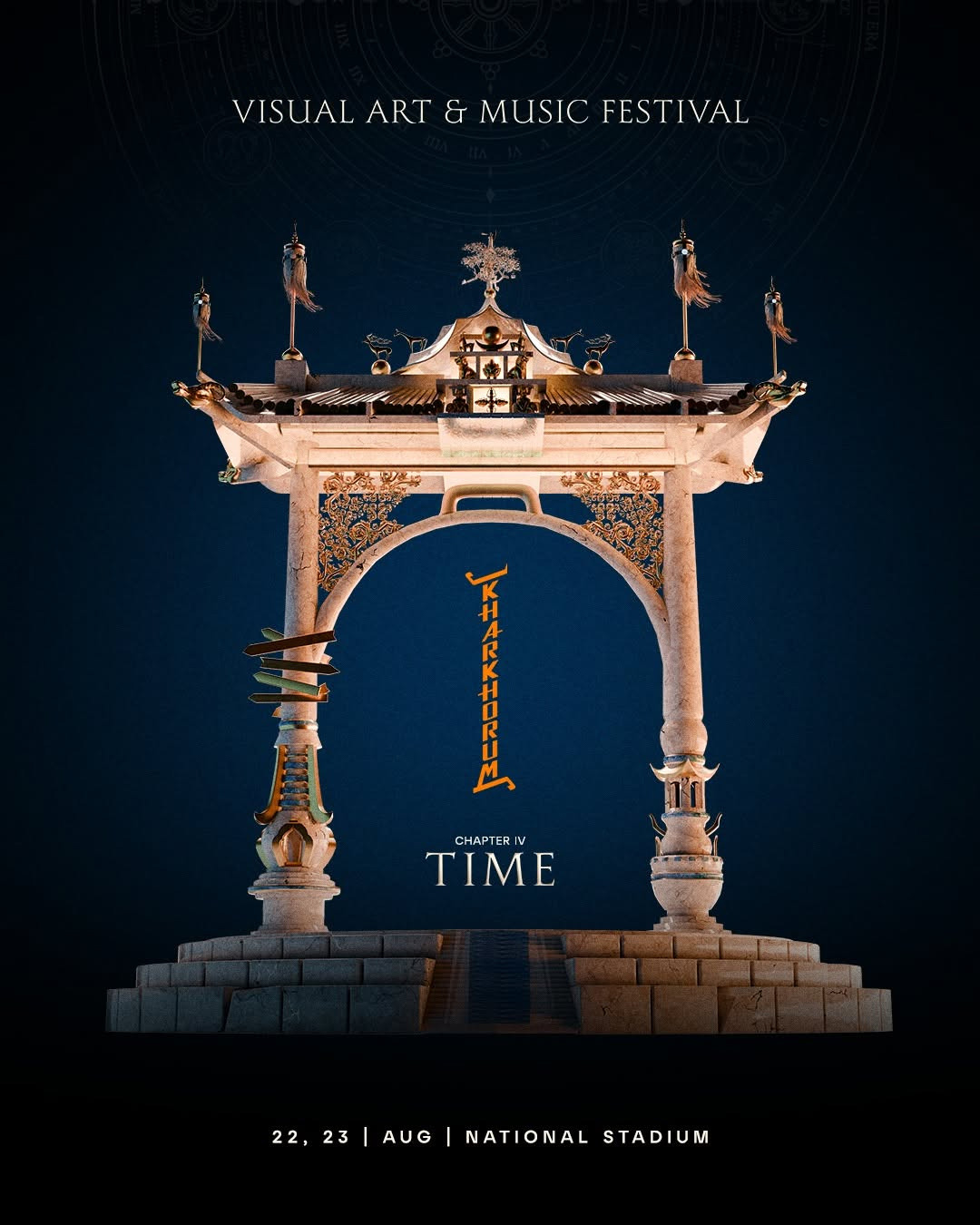
Mongolia’s creative industry is reaching a new milestone as Kharkhorum Festival 2026 prepares to transform National Stadium into the country’s largest-ever music and visual arts venue on August 22–23. Bringing together music, digital art, cutting-edge technology and immersive performances, the festival is positioning itself as one of the biggest cultural events in the region.
Carrying the theme “TIME,” this year’s festival explores the connection between Mongolia’s ancient civilization and its modern creative identity. Named after Kharkhorum, the historic capital of the Mongol Empire, the event seeks to reinterpret the country’s rich cultural legacy through contemporary music, visual arts and innovative technology.
One of the festival’s biggest attractions will be its 300-meter-long main stage, expected to be the largest festival stage ever built in Asia. Featuring panoramic LED screens, synchronized lighting, immersive digital visuals and state-of-the-art sound technology, the production aims to deliver a world-class concert experience rarely seen in Mongolia.
More than a music festival, Kharkhorum has evolved into a multidisciplinary cultural event. Visitors will experience live performances, electronic music, digital art installations, interactive exhibitions, creative zones and modern entertainment where technology and artistic expression come together.
A major milestone this year is the festival’s collaboration with Mixmag Lab, one of the world’s most influential electronic music platforms. The partnership is expected to bring internationally recognized DJs and performers to Mongolia while introducing local artists to wider global audiences. It also reflects Mongolia’s growing ambition to become part of the international festival circuit.
Beyond entertainment, the festival represents the rapid growth of Mongolia’s creative economy. Large-scale cultural events generate business for hotels, restaurants, transportation services and local enterprises while creating opportunities for musicians, designers, photographers, filmmakers and production crews. They also help introduce international visitors to a contemporary side of Mongolia that extends beyond its nomadic heritage and spectacular landscapes.
For young Mongolians, festivals like Kharkhorum are becoming platforms for creativity, collaboration and innovation. Local artists share the stage with international performers, while visual creators, designers and technology companies showcase new ideas in front of thousands of visitors. Such exchanges strengthen the country’s cultural ecosystem and encourage future international partnerships.
The symbolism behind the festival’s name is equally meaningful. More than 800 years ago, Kharkhorum served as the political and cultural heart of the Mongol Empire, welcoming merchants, diplomats and scholars from across Eurasia. Today’s festival seeks to revive that spirit—not through political influence, but through music, art and international cultural exchange.
With thousands of festivalgoers expected to gather under the Ulaanbaatar sky this August, Kharkhorum Festival 2026 promises to be more than a weekend of concerts. It is becoming a showcase of Mongolia’s confidence in presenting its creative industries to the world and demonstrating that its future can be just as inspiring as its remarkable past.
Tickets for the two-day festival are now on sale through Mongolia’s major online ticketing platforms, including EventX and Ticket.mn. General admission starts at 119,000 MNT, while organizers have also introduced a range of ticket options for festivalgoers seeking enhanced experiences. With the event less than three weeks away, demand is expected to increase as the opening day approaches.
Source: Zuuniimedee № 146 (7888) August 7, 2026
In an age of widespread misinformation, choose facts you can trust.
Zuunii Medee delivers verified, credible, and reliable news. Stand with the truth.
Support independent journalism — subscribe Zuunii Medee today. www.zuuniimedee.mn