

By B.Nyamsuren
Mongolia is preparing to nominate Shar Tsav, a fossil-rich site in Umnugovi province, for inclusion in the UNESCO Global Geoparks Network — a move that would mark the country’s first entry into the international system.
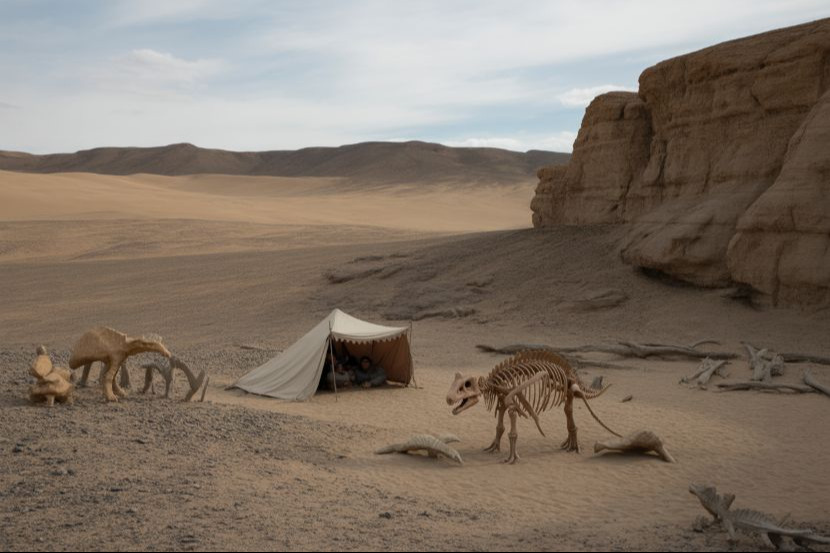
Shar Tsav, located in Manlai soum, is one of Mongolia’s most important paleontological sites. More than 13,600 dinosaur fossils have been discovered in the area. Among them are tracks of the bird-like dinosaur Avimimus protentosus (Kurzanov, 1981), a species found only in Mongolia.
The site offers rare insight into ancient ecosystems that existed tens of millions of years ago. Its fossil layers continue to attract researchers studying dinosaur evolution and prehistoric environments.
Preparations to meet UNESCO’s criteria are now underway. The initiative is being implemented in cooperation with UNESCO and Rio Tinto. The project aims to protect Shar Tsav’s geological heritage while promoting sustainable tourism and creating economic opportunities for local communities.
If approved, Shar Tsav would become Mongolia’s first UNESCO Global Geopark.
UNESCO Global Geoparks are recognized not only for exceptional geological value but also for how they link nature, science and community life. These areas serve as open-air classrooms and research sites, while also supporting local development through education and tourism.
At present, 229 UNESCO Global Geoparks are officially recognized across 50 countries. Europe hosts 94 sites, while Asia and the Pacific region account for 104. Latin America has nine, North America five and Africa six.
China currently has the largest number of geoparks, representing around 20 percent of the global total. Sites such as Zhangjiajie National Forest Park are known for dramatic geological formations shaped millions of years ago. These examples show how geopark status can elevate both scientific recognition and tourism appeal.
Unlike strict conservation zones, UNESCO Global Geoparks are designed to balance protection with development. Local communities play a central role in managing these sites, ensuring that economic benefits remain in the region.
For Mongolia, securing geopark status would bring international recognition to one of its most scientifically significant fossil areas. It would also provide a structured framework to preserve the site while expanding responsible tourism.
Mongolia is already globally known for its vast landscapes and dinosaur discoveries. Inclusion in the UNESCO network would strengthen that reputation and connect the country to a global platform dedicated to geological heritage and sustainable development.
The nomination process is ongoing, but officials see the initiative as both a scientific milestone and a strategic step toward diversifying Mongolia’s tourism sector.
Source: Zuuniimedee № 31 (7773) February 13, 2026
In an age of widespread misinformation, choose facts you can trust.
Zuunii Medee delivers verified, credible, and reliable news. Stand with the truth.
Support independent journalism — subscribe Zuunii Medee today. www.zuuniimedee.mn