


By B.Nyamsuren
Mongolia’s government has reached a preliminary agreement with several major mining companies to direct 60 percent of returns from key strategic and secondary deposits to the public through the National Wealth Fund.
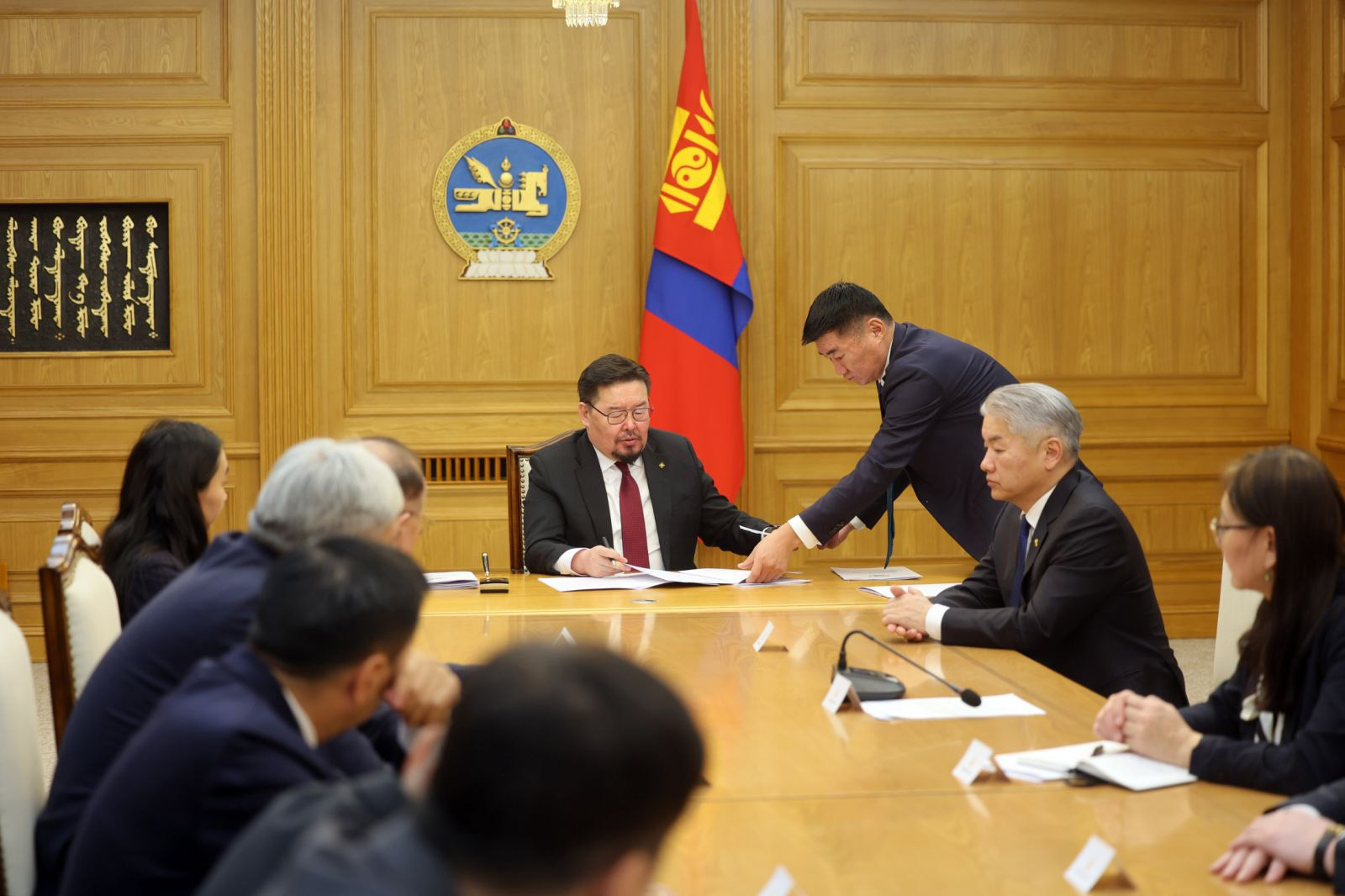
The memorandum was signed in the office of Prime Minister G. Zandanshatar with representatives from MCS Group, Energy Resources, Khangad Exploration, Usukh Zoos and Achit Ikht.
The agreement covers parts of the Tavan Tolgoi coal group, the Nariin Sukhait deposit and the Erdenet secondary deposit. Under the terms, 60 percent of annual returns from these assets will be transferred to the Wealth Fund. If returns fall below that threshold in a given year, companies will make adjustment payments to meet the agreed share.
The proposal will now be submitted to parliament for discussion.
The government says the deal reflects a broader effort to ensure that natural resource wealth benefits citizens in line with Mongolia’s Constitution, which states that mineral resources belong to the people. Officials described the agreement as the result of multiple rounds of negotiations and technical calculations, taking into account global market conditions and project sustainability.
Prime Minister Zandanshatar said the agreement demonstrates cooperation between the state and private sector, emphasizing that the companies’ participation was voluntary rather than forced.
According to government data, Erdenes Mongol transferred 500.5 billion MNT to the savings fund in 2024 and 412 billion MNT in 2025, bringing the total to 912 billion MNT over two years. Most of that revenue came from six major strategic deposits managed under its structure.
Officials say reporting on the fund will become more transparent through Mongolia’s e-government platform, allowing citizens to track how much revenue is collected and how it is spent. Planned spending priorities include housing, education and healthcare.
Mining remains central to Mongolia’s economy, accounting for the majority of exports and a significant share of government revenue. Public debate over how resource wealth should be shared has intensified in recent years, particularly during periods of high commodity prices.
Profit-sharing arrangements between governments and private mining firms are often politically sensitive. Investors seek predictable and stable terms, while governments face pressure to ensure that resource wealth is distributed more broadly. Balancing those interests is rarely straightforward.
Globally, resource-rich countries are also rethinking how mineral revenues are managed. Rising demand for coal, copper and other critical minerals has strengthened the bargaining position of producer nations. At the same time, investors continue to prioritize transparency and regulatory stability.
For Mongolia, the 60 percent agreement sends a clear political message that public benefit must be visible. The long-term impact, however, will depend on how consistently the agreement is implemented and how transparently the funds are managed. The parliamentary debate is likely to focus on those details.
Source: Zuuniimedee № 31 (7773) February 13, 2026
In an age of widespread misinformation, choose facts you can trust.
Zuunii Medee delivers verified, credible, and reliable news. Stand with the truth.
Support independent journalism — subscribe Zuunii Medee today. www.zuuniimedee.mn