

By B.Nandin
Mongolia has stepped into the global policy debate on artificial intelligence, aiming to harness AI for inclusive, human-centered development and to mitigate the risks of an expanding digital divide.
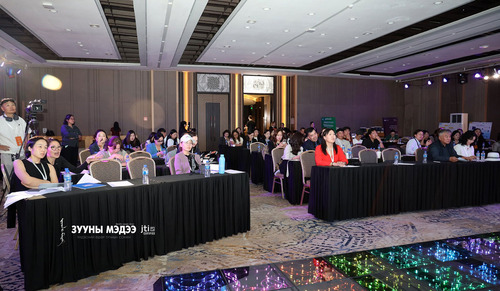
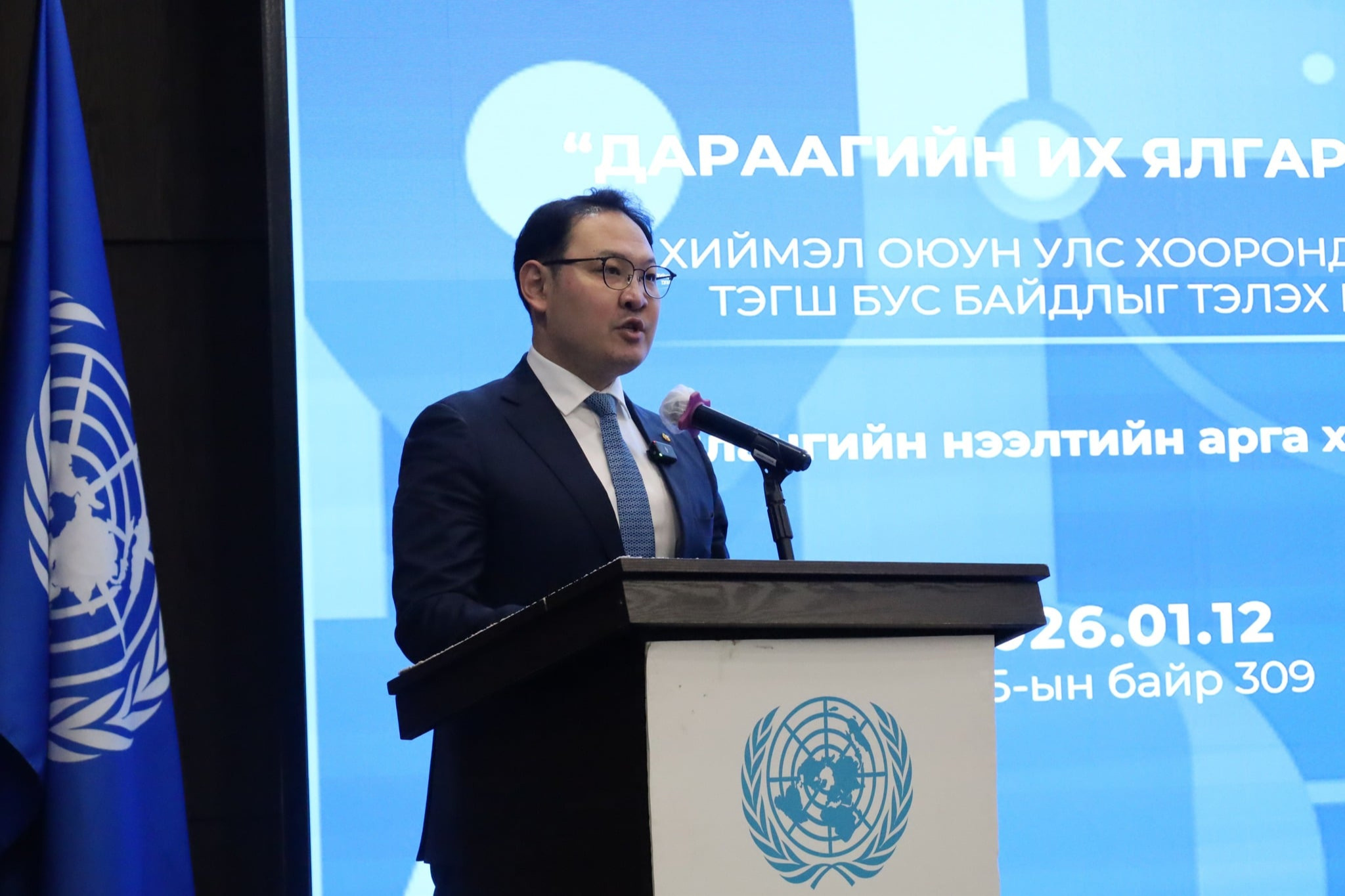
The United Nations Development Programme (UNDP), in partnership with the Ministry of Digital Development, Innovation and Communications, organized the launch of the Asia-Pacific report The Next Great Divergence, alongside a policy discussion on Mongolia’s artificial intelligence (AI) readiness.
The report underscores that while AI holds immense potential to boost productivity and enhance the quality and accessibility of healthcare, education, and public services, it also poses a real risk of widening disparities between countries. These risks are particularly pronounced where infrastructure, digital skills, and governance capacities remain uneven. The report describes this challenge as the “Next Great Divergence,” warning that today’s policy choices on AI adoption will play a decisive role in shaping future development paths.
Opening the event, Matilda Dimovska, UNDP Resident Representative in Mongolia, noted that although AI is advancing at unprecedented speed, many countries are still struggling to establish the foundational systems needed to fully benefit from it. She emphasized that gaps in infrastructure, skills, and governance could further widen global development inequalities if left unaddressed.
Member of Parliament and Minister of Digital Development, Innovation and Communications E. Batshugar outlined Mongolia’s policy approach, stressing that AI should not be seen as a tool to replace people, but as a means to expand human potential and improve well-being. He highlighted the importance of close cooperation between government, the private sector, and international partners, particularly in prioritizing AI applications in healthcare, education, and public safety.
The discussion also featured a presentation by Firuz Saydakhzaev, UNDP Climate Finance and Development Economist in Mongolia, who explored how the rapid advancement of AI is reshaping economic and social development in unequal ways across countries. He emphasized that Mongolia faces the dual challenge of leveraging AI as a new engine of economic growth while simultaneously implementing policies to reduce social inequality.
In addition, a panel discussion titled “AI for Inclusive Development: From Global Risks to Local Solutions” examined Mongolia’s policies and implementation plans on big data and artificial intelligence, sectoral applications of AI, technological innovation, as well as the key challenges and opportunities associated with AI adoption.
Overall, the event served as an important platform for multi-stakeholder dialogue on how Mongolia can advance AI development based on inclusive, human-centered principles—ensuring that no one is left behind while avoiding the risks of the “Next Great Divergence.”
Source: Zuuniimedee № 10 (7752) January 16, 2026
In an age of widespread misinformation, choose facts you can trust.
Zuunii Medee delivers verified, credible, and reliable news. Stand with the truth.
Support independent journalism — subscribe Zuunii Medee today. www.zuuniimedee.mn