


By B.NYAMSUREN
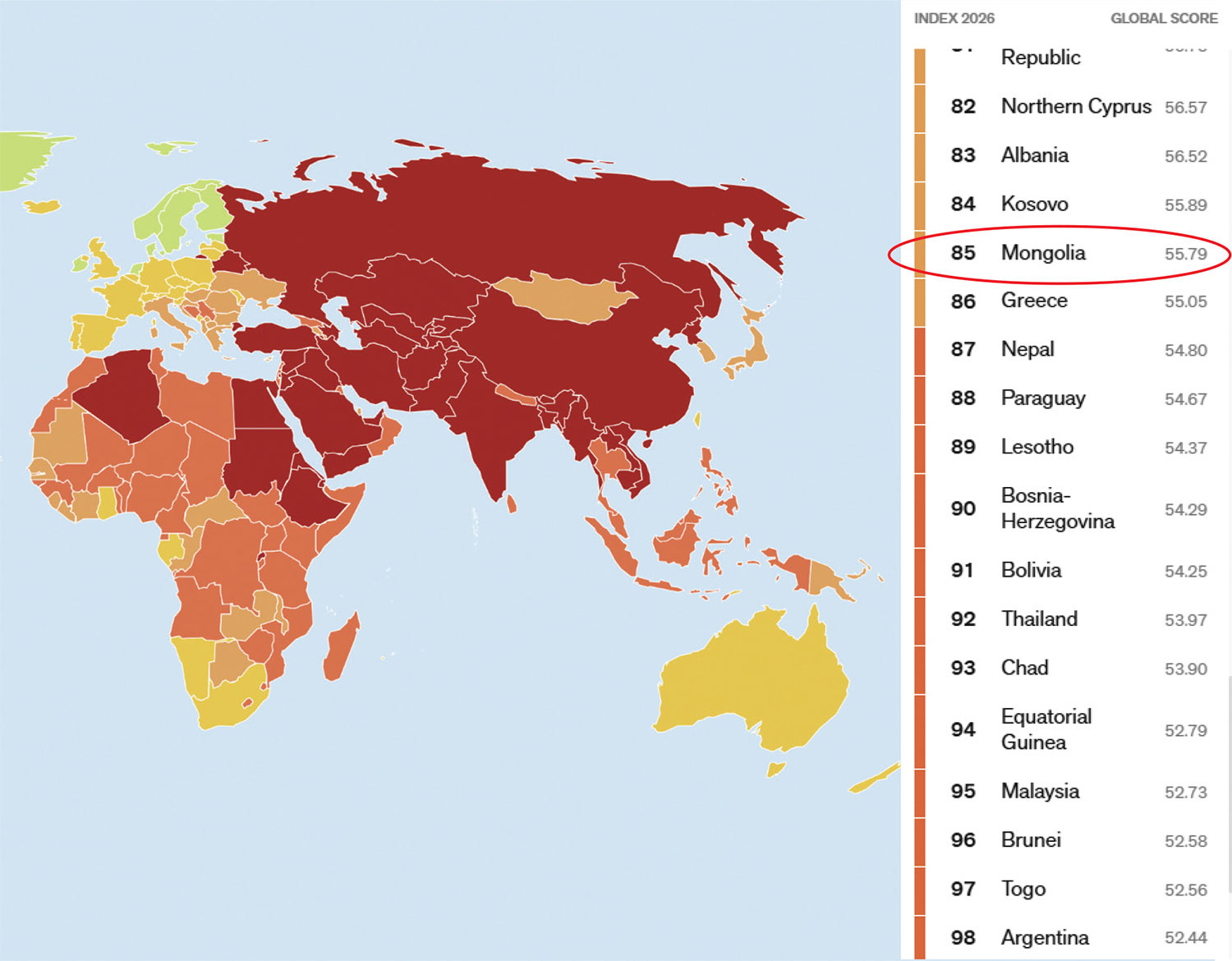
Mongolia ranked 85th in the 2026 World Press Freedom Index, rising 17 places from the previous year. To discuss the key factors behind the improvement, as well as the broader global decline in press freedom, B. Dulamkhorloo, founder of the Nest Center for Journalism Innovation and Development, held an online interview with representatives of Reporters Without Borders (RSF), including Advocacy Manager Alexandra Bielakowska and Advocacy Officer Arthur Roche.
During the interview, the RSF representatives discussed the worsening global environment for press freedom, the growing use of legal measures against journalists, and the reasons behind Mongolia’s improved ranking in this year’s index. The following is an edited version of the interview.
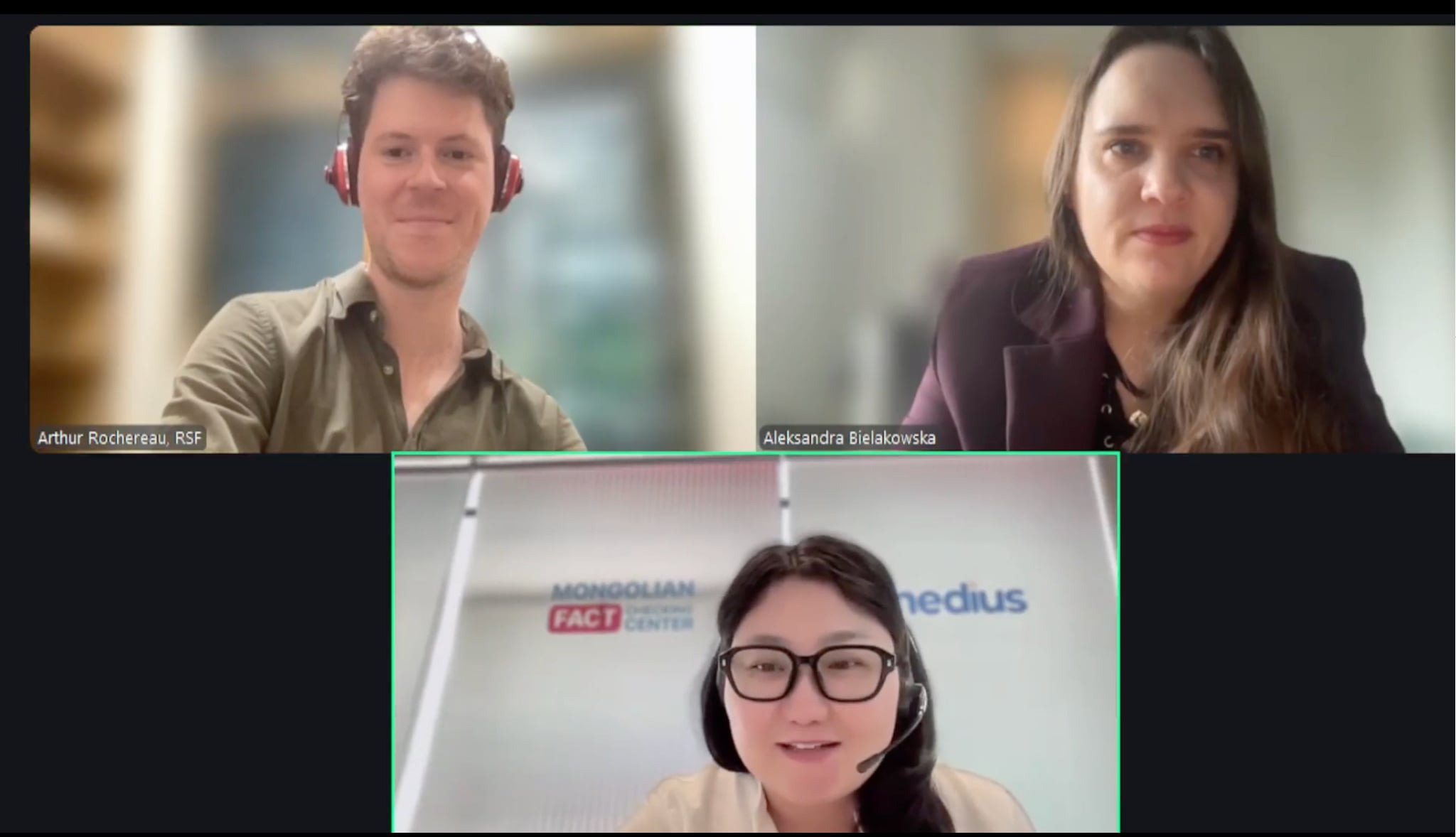
B.Dulamkhorloo: Mongolia’s ranking improved this year, but RSF warned that press freedom globally is continuing to decline. How serious is the current situation?
Alexandra Bielakowska:
Reporters Without Borders has published the World Press Freedom Index for 25 years, and this year’s results are among the worst in the history of the index. More than half of the countries surveyed are now categorized as being in a “difficult” or “very serious” situation for press freedom. Only a very small percentage of countries remain in the “good” category.
This is becoming a major concern globally. Journalists and media organizations are facing growing pressure almost everywhere, and protecting independent journalism is becoming increasingly important.
B.Dulamkhorloo: One of the concerns highlighted in this year’s report is the criminalization of journalism. What should countries such as Mongolia pay attention to?
Alexandra Bielakowska:
We are seeing similar tactics used even in countries considered democratic. Governments are increasingly using laws related to national security, cyber security or public safety against journalists.
Media organizations should not become targets under such laws. In countries such as Russia, China, Syria and Iran, journalists are often accused or criminalized simply for reporting facts, even without evidence of wrongdoing.
Arthur Roche:
The legal environment for journalists has deteriorated sharply this year. More than 60 percent of the countries included in the index recorded declines in this area.
Terrorism laws, defamation laws and other legal mechanisms are increasingly being used strategically against journalists. Reporters investigating sensitive issues often face lawsuits or legal retaliation. Political actors are also exploiting loopholes in the legal system to pressure journalists and independent media organizations.
B.Dulamkhorloo: Why is protecting press freedom and freedom of expression so important?
Alexandra Bielakowska:
Among all human rights issues, press freedom is especially important because it is directly linked to the public’s right to know. When press freedom is restricted, people lose access to reliable information.
If journalists cannot speak freely, society’s broader freedom of expression is also weakened. In many cases, authorities attempt to silence journalists in order to hide corruption, abuse of power or other wrongdoing.
We are also seeing disinformation spread through social media platforms. Not only politicians, but also influential business groups and powerful individuals use these platforms to manipulate public opinion or protect their own interests. As a result, media organizations increasingly become targets.
B.Dulamkhorloo: Mongolia improved by 17 places this year. How does RSF interpret this progress?
Alexandra Bielakowska:
RSF evaluates 180 countries using five indicators. Compared with 2025, Mongolia’s media environment has shown improvement. One of the key reasons was the decline in arrests and legal actions against journalists in 2024 and 2025.
Compared with many other countries, attacks against journalists in Mongolia appear to have decreased. Mongolia has long attracted attention because it maintains a relatively open media environment despite being located between two major authoritarian powers. Even last year, Mongolia’s ranking was considered relatively positive.
Another important factor is the active role played by civil society organizations, journalists and media professionals in defending press freedom. Different groups in Mongolia are working together to address challenges facing the media sector, and that collective effort has had a positive impact.
B.Dulamkhorloo: Were there any specific legal developments that contributed to Mongolia’s improved score?
Arthur Roche:
Yes. One important development was the Constitutional Court’s ruling that Article 13.14 was unconstitutional. That decision positively influenced Mongolia’s ranking this year.
The active involvement of lawyers, civil society organizations and media sector representatives who collectively opposed the provision was also very important.
B.Dulamkhorloo: Mongolia’s parliament may soon discuss new amendments to the Criminal Code. What should lawmakers and journalists pay attention to?
Arthur Roche:
When new legislation related to press freedom is introduced, it is important to carefully examine whether the draft contains loopholes that could later be used against journalists.
Even if a provision is rewritten differently, the impact may remain the same if it allows authorities to pressure independent reporting. The definitions used in the draft law are therefore extremely important. We will continue monitoring the parliamentary discussions closely.
B.Dulamkhorloo: What should Mongolia do to further strengthen press freedom?
Alexandra Bielakowska:
Improving press freedom is not only the responsibility of journalists or civil society organizations. Lawmakers and state institutions also have an important role.
If Mongolia wants to protect its democracy, it must continue protecting journalists through strong legal safeguards and support independent media self-regulation. RSF remains ready to provide recommendations and support regarding legislation related to media freedom.
Arthur Roche:
RSF has repeatedly emphasized that improving the economic sustainability of journalism is also important. Independent media organizations need stronger support mechanisms.
At the same time, governments must ensure that journalists are protected from intimidation, legal harassment and physical attacks. Clear legal protections and accountability mechanisms are essential for safeguarding press freedom.
Source: Zuuniimedee № 88 (7830) May 8, 2026
In an age of widespread misinformation, choose facts you can trust.
Zuunii Medee delivers verified, credible, and reliable news. Stand with the truth.
Support independent journalism — subscribe Zuunii Medee today. www.zuuniimedee.mn